

What Time Is It in Hawaii? Current Hawaii Time and Local Time Converter Tool
Affiliate Disclosure
This post may contain affiliate links, meaning I earn a small commission if you use the links. View our Privacy Policy and for more.
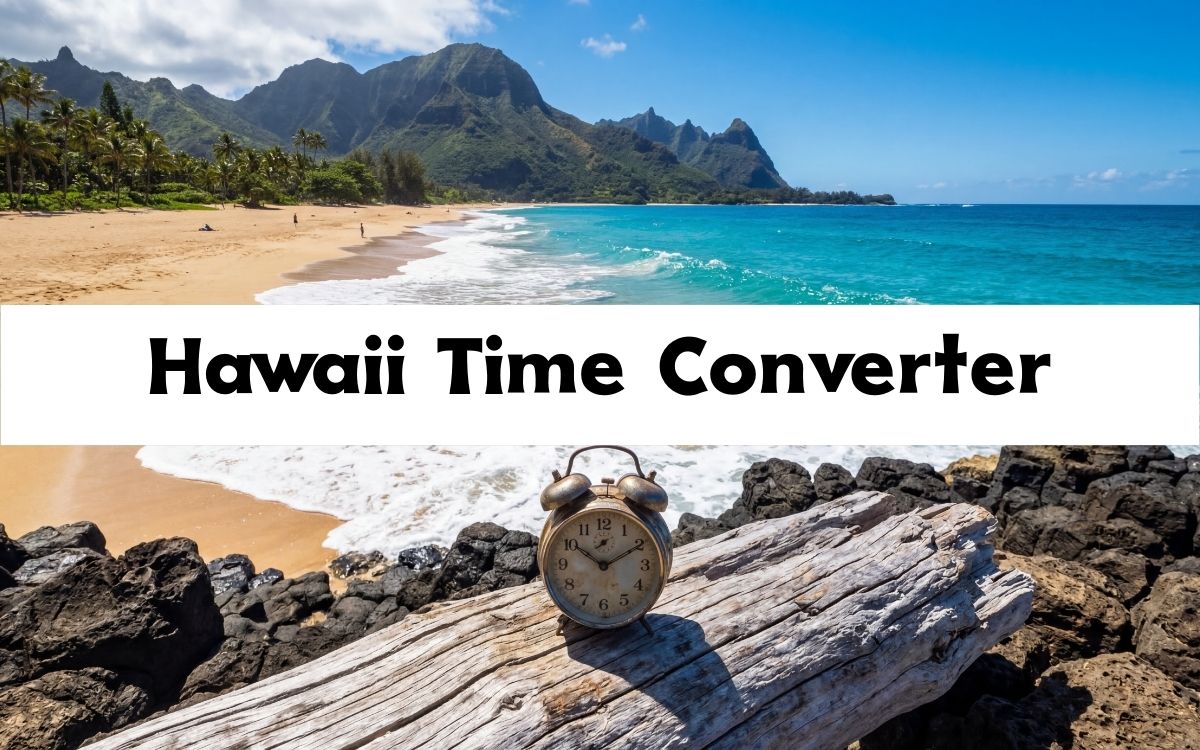
Wondering what time is it in Hawaii right now? The live clock above gives you your instant answer. Hawaii runs on Hawaii Standard Time (HST), which is UTC-10:00, all year long. No clock changes, ever.
I'm Bryan Murphy, a Certified Hawaii Destination Expert and host of the Hawaii's Best Travel podcast. I've made more than 30 trips to the islands and spend a lot of time helping people plan their first visit. One of the most common questions I get is about Hawaii time and when to call. So I built this page to give you a live clock, a free converter, and all the practical info you actually need.
Use the jump links above to skip to the tool or chart you need. Or keep reading to understand exactly why Hawaii time works the way it does, and how to use that info to plan a better trip to our islands.
What Knowing the Time in Hawaii Matters for Trip Planning
Before you book a flight, schedule a tour, or try to call someone on our islands, you need to understand the time in Hawaii and how it compares to your home clock. Getting this wrong is one of the most common rookie mistakes I see first-time visitors make. It affects everything from your first morning on the island to whether your family back home calls you at 4am by accident.
The question I hear constantly is what time is it in Hawaii right now, and how far behind is that from where I'm standing? The answer changes depending on the time of year, and most people don't realize that until they're already on the plane. This section and the tools on this page will make sure you have it locked in before you go.
Knowing the time in Hawaii in advance helps you schedule arrival-day activities without burning yourself out, plan calls and video chats with people at home during reasonable hours for both sides, and book tours and restaurant reservations at times that actually align with how your body will feel on day one. It's practical knowledge that pays off every single day of your trip.
What Time Zone Is Hawaii In?
Hawaii uses Hawaii Standard Time (HST), which sits at UTC-10:00. That means Hawaii is 10 hours behind Coordinated Universal Time, the global clock standard.
What makes Hawaii unique is that the clock never moves. Most states on the mainland move their clocks forward in spring and back in fall. That's called Daylight Saving Time (DST). But Hawaii opted out back in 1967, and the clocks there haven't budged since.
I always tell the travelers I work with: the time in Hawaii is simple. There is one number, and it never changes. You just have to remember that your clock might shift twice a year, which changes the gap between you and our islands.
A Note on "Mainland," "The Continent," and "Contiguous U.S." 🌺
On this page you'll see the word "mainland" used often. It's the everyday shorthand you'll hear throughout the Hawaiian Islands, used by visitors, kamaaina (longtime residents), and locals alike. Most people in Hawaii know exactly what it means: the rest of the country, over there across the Pacific.
That said, language around Hawaii's relationship to the U.S. carries real cultural weight, and it's worth a moment to understand the nuance. Some Native Hawaiians and sovereignty advocates prefer the word "continent" or "the Continental U.S." Their reasoning: "mainland" implies Hawaii is secondary to a "main" land mass, which carries a political undertone for those who view Hawaii's 1959 statehood through the lens of history and self-determination. Using "continent" or "continental" keeps the framing geographically neutral.
There's also a precise legal and geographic term worth knowing: "contiguous United States." According to the U.S. Board on Geographic Names, "continental United States" refers to the 49 states on the North American continent. That's all states except Hawaii. "Contiguous United States" is more specific still: it means only the 48 states that share land borders, excluding both Hawaii and Alaska. So technically, Alaska is "continental" but not "contiguous," and Hawaii is neither.
You'll also hear the term "neighbor islands" used in Hawaii to refer to all islands other than Oahu. This is preferred over "outer islands," which can sound like those islands are somehow less important. They are not. They're just not home to Honolulu.
I use "mainland" in the common, conversational sense, the same way most visitors and many locals use it. I also use "Continental U.S." where cultural precision matters. Both are used with respect and aloha for everyone who calls the Hawaiian Islands home.
Whatever term you prefer, when it comes to time zones, the Continental U.S. is where all the clock-changing happens. Hawaii just stays put, and that's a big part of what makes Hawaii Standard Time so beautifully simple.
Hawaii Time Difference From Major Cities
Here's the key thing most people miss: the time gap between Hawaii and your city changes during the year. Hawaii stays at UTC-10 always. But when your city observes DST, your clocks spring forward, making the gap one hour smaller. When they fall back, the gap gets one hour bigger again.
The table below shows both gaps: Winter (Nov-Mar), when most of the US and Europe observe standard time, and Summer (Mar-Nov), when DST is active. The "Current Time" column updates live using your browser's data.
| City | ❄️ Winter Difference | ☀️ Summer Difference | Live Time Now |
|---|
* The highlighted row is the city closest to your detected time zone. Live times update every 30 seconds. Hawaii time is always UTC-10. Differences shown as hours Hawaii is behind each city.
Why Doesn't Hawaii Do Daylight Saving Time? 🕐
This is one of the most common questions I get from people planning their first trip to our islands. The short answer: Hawaii opted out in 1967, and it made total sense given where the islands sit on the globe.
The Geography Reason
Daylight Saving Time was originally designed to save energy by shifting daylight into the evening. It works because states further from the equator see big swings in sunrise and sunset times across the seasons.
Hawaii sits close to the equator, around 20 degrees north latitude. That means sunrise and sunset times there barely change throughout the year. The swing between the shortest and longest days is less than an hour. There is simply nothing to "save."
The Legal Reason
In 1966, Congress passed the Uniform Time Act, which standardized DST across the country. But it included an exemption for states that wanted to stay on standard time year-round. Hawaii passed a state law in 1967 to take that exemption. The islands have been DST-free ever since.
How the Time Gap Changes When the Mainland Shifts Clocks
When mainland clocks spring forward (+1 hour), Hawaii is effectively 1 hour closer. When they fall back (-1 hour), the gap widens again.
What This Means for You as a Traveler
If you're calling us from New York in January, Hawaii is 5 hours behind you. But if you call in July? Hawaii is only 6 hours behind. Wait, that math seems wrong. Let me walk it through: in winter, New York is on EST (UTC-5), so the gap to HST (UTC-10) is 5 hours. In summer, New York is on EDT (UTC-4), so the gap to HST (UTC-10) is 6 hours.
Yep, the gap actually widens in summer because New York moves forward but Hawaii doesn't. Use the converter in the next section to double-check any specific date or time.
This trips people up all the time. A traveler I was working with told me they called someone in Hawaii at what they thought was a polite 9am East Coast time in July. That's 3am in Hawaii. Don't be that person.
Other Places That Also Skip DST
Hawaii isn't alone in this. A few other places never observe Daylight Saving Time either:
In terms of US states, though? It's just Hawaii and Arizona. And Arizona only skips DST because, like Hawaii, the desert heat makes longer evening daylight hours less desirable.
If you're planning your trip and want to know the best windows for travel deals and good weather, check out my Best Time to Visit Hawaii guide. Knowing the time zone shift before you go makes scheduling your first week on island a lot smoother.
🔄 Hawaii Time Converter
Need to know what time is it in Hawaii on a specific date or at a specific hour? Pick your time zone below. The converter automatically adjusts for Daylight Saving Time so the time in Hawaii you see is always accurate. No math required.
📅 Hawaii Business Hours Overlap (8 AM – 5 PM HST)
* Bars show the equivalent local time when Hawaii businesses are open (8am-5pm HST), based on current DST status. Overlap = the window when both your time zone and Hawaii are in normal business hours.
Best Times to Call Someone in Hawaii
Ever tried to call someone in Hawaii at what you thought was a reasonable hour? Yeah, that 6am wake-up call isn't gonna go over well. Here's a simple guide based on the overlap chart above.
Hawaii business hours run roughly 8am to 5pm HST. Here's what that looks like from the mainland during summer (when DST is active):
From Los Angeles (PDT)
Call between 11am and 8pm your time in summer, 10am to 7pm in winter. Mornings feel early here.
From Denver (MDT)
Call between noon and 9pm your time in summer, 11am to 8pm in winter.
From Chicago (CDT)
Call between 1pm and 10pm your time in summer, noon to 9pm in winter.
From New York (EDT)
Call between 2pm and 11pm your time in summer, 1pm to 10pm in winter. Don't call before noon Eastern if it's a business call.
A Quick Tip from Living Here
I always tell people: if it's after 8pm your time on the East Coast, think twice before calling Hawaii. It's only 2pm here, so it's totally fine for us. But lots of people assume they've "missed the window." They haven't. We're still awake, likely at the beach or grabbing dinner.
The mistake most visitors make is forgetting the time difference once they land. Your body clock is still on mainland time for the first few days. Read more about managing this in my post on first-time Hawaii visitor mistakes to avoid.
Planning Around the Hawaii Time Difference
The time difference does more than affect phone calls. It shapes your whole first week in Hawaii. Here's what I want every visitor to know before they arrive.
Jet Lag: East to West Is Easier, But Watch Out
Flying west to Hawaii from the mainland means you're going back in time. East Coast travelers lose 5-6 hours. West Coast travelers lose 2-3 hours. Going west is generally easier on the body than going east because you're extending your day rather than shortening it.
But here's the catch: your body will still wake you up at 4-5am for the first few days. To a New Yorker, that's 9-10am, which is totally normal. To your body, it's time to get up.
My advice? Use those early mornings. Watch the sunrise. Hit an empty beach before the crowds. That "jet lag" becomes your secret weapon. If you're wondering how many days to plan for your trip to properly adjust, check out how many days you need in Hawaii.
Tour Pickup Times
Most Hawaii tours depart early. Sunrise hikes, whale watches, snorkel cruises, and luau shuttles often leave before 7am or 8am HST. If you're fresh off the plane, that can feel brutal on your first night.
My tip: don't book your big early-morning tour for day one or day two. Give yourself a day to settle in, feel the island rhythm, and let your sleep schedule catch up. Check out my Hawaii travel tips for 2026 for more practical first-trip advice.
Sports on TV in Hawaii
This one surprises a lot of people. NFL games that kick off at 1pm Eastern on Sundays start at 7am or 8am HST. Prime-time NBC Sunday Night Football? That's 3:20pm in Hawaii.
If you're a sports fan, this is actually awesome. You watch the game in the morning, and the whole afternoon is free for the beach. It's one of my favorite things about living here.
Work Calls and Remote Work from Hawaii
More people are working remotely from Hawaii these days. If your team is on the East Coast, a 9am EST standup means you're logging in at 3am or 4am HST in summer. That's rough.
Use the converter above to map out your work schedule before you commit to a remote work trip to Hawaii. A lot of digital nomads here shift their schedules toward the afternoon HST to overlap with morning EST. It can work, but it takes planning.
And if you're planning a full vacation, not a workation, then disconnect! That's what our islands are here for.
Hawaii Standard Time
Everything you need to know, at a glance
What Is "Island Time" in Hawaii? 🌺
If you've ever visited Hawaii or talked to someone who's spent real time on our islands, you've probably heard the phrase "island time." But it's easy to misunderstand what it actually means. It is not an excuse to be late. It is something much more interesting.
The Real Meaning
On the mainland, time controls most of what you do. You eat at 6pm because that's dinnertime. You work from 9 to 5 because that's the schedule. You check your phone every five minutes because... well, everyone does.
Out on our islands, there is a different relationship with time. The ocean has its own rhythm. The sun has its own schedule. When the fish are biting in the morning, that is when you fish. When the sunset turns pink and gold, you stop what you are doing and watch it.
After more than 30 trips to Hawaii, I can tell you this firsthand. Visitors notice the shift within the first day or two. Something slows down. The tightness in your shoulders lets go. The urge to check your inbox fades. That is the real island time.
How It Connects to the Time Zone
There's something poetic about Hawaii being the most isolated time zone in the US. The islands sit 2,400 miles from the nearest US state. The clocks never change. Sunrises and sunsets vary by less than an hour all year.
That geographic and temporal isolation has shaped how people live here. The islands are not disconnected from the world. They are just beautifully at the end of the line. And sometimes being at the end of the line is the best place to be.
When you land in Hawaii, your home clock is still ticking in your head. It takes a few days for that to fade. Give it time. Trust the island. It'll happen.
Hawaii Time Planning Tips Before You Arrive
Knowing the time in Hawaii before you arrive isn't just a numbers exercise. It helps you plan your schedule, avoid rookie mistakes, and get the most out of your first week. Here's what I always share with travelers before their first trip to our islands.
- Set your clocks as soon as you board the plane. Don't wait until you land. The sooner your mind adjusts, the better. Use your phone's "Add a Clock" feature to show Hawaii time alongside your home time for the first few days.
- Don't schedule a 7am tour for your first full day. Your body will be confused. Give yourself one easy arrival day before committing to a sunrise hike.
- Use the "early wake" to your advantage. If you're wide awake at 4am HST on day one, that's normal. Go to the beach. Watch the sky turn pink before sunrise. You'll have an hour of paradise all to yourself.
- Check restaurant reservation times carefully. Some popular spots in Honolulu and Maui are fully booked by the time the "dinner hour" feels right to your mainland-tuned stomach. Book earlier than you think you need to.
- Tell family and friends at home when to call. Print out or screenshot a simple reference: "Call me between 11am-8pm your Eastern time" (or whatever your home zone is). Saves everyone confusion and 5am wake-ups.
- Check the converter on the day of DST changes. If you're in Hawaii during a mainland DST switch, the gap between you and home shifts by an hour. Use the converter tool above on those dates so nothing catches you off guard.
For a deeper dive into smart trip planning, check out my full Best Time to Visit Hawaii guide. It covers everything from weather patterns to crowd levels to money-saving timing.
And if you're still figuring out how many days to request off work, my post on how many days you need in Hawaii gives honest, experience-based advice. Hint: more than you think.
Frequently Asked Questions About Hawaii Time
Here are the questions I get asked most often about what time it is in Hawaii and how to plan around the time difference.
Hawaii is in the Hawaii Standard Time (HST) zone, which is UTC-10:00. This is the official time zone for the state of Hawaii and the island of Oahu, including Honolulu. It is also used by Johnston Atoll.
Unlike most US time zones, Hawaii Standard Time is the only time name Hawaii uses. There is no "Hawaii Daylight Time" because Hawaii does not observe Daylight Saving Time.
No. Hawaii does not observe Daylight Saving Time. Hawaii clocks have not changed since 1967, when the state passed a law exempting it from the federal Uniform Time Act.
The reason is geography. Hawaii is close enough to the equator that sunrise and sunset times barely change across the seasons. There is no practical benefit to shifting the clocks. This makes Hawaii one of only two US states (along with Arizona) that stay on standard time year-round.
The gap depends on the time of year because mainland clocks change for DST but Hawaii's don't:
New York (EST/EDT): Hawaii is 5 hours behind in winter, 6 hours behind in summer.
Chicago (CST/CDT): Hawaii is 4 hours behind in winter, 5 hours behind in summer.
Los Angeles / California (PST/PDT): Hawaii is 2 hours behind in winter, 3 hours behind in summer.
It depends on the season:
In winter (November to March): When it is noon in Los Angeles (PST), it is 10:00 AM in Hawaii. Los Angeles is 2 hours ahead of Hawaii during this period.
In summer (March to November): When it is noon in Los Angeles (PDT), it is 9:00 AM in Hawaii. Los Angeles shifts forward one hour for Daylight Saving Time, widening the gap to 3 hours.
Use the Hawaii Time Converter above for any specific date and time.
Almost. Hawaii at UTC-10 is the westernmost state time zone. However, the US territory of American Samoa uses UTC-11, which is one hour further behind Hawaii.
The westernmost US territory overall is the uninhabited Baker Island and Howland Island, which use UTC-12. But among inhabited US territories and states, Hawaii is indeed one of the last places to see any given time of day.
For a personal call, the best window from the East Coast is roughly 1:00 PM to 10:00 PM Eastern time during summer (EDT), or noon to 9:00 PM Eastern time during winter (EST).
That puts Hawaii between 7:00 AM and 4:00 PM local time, which is a comfortable range for most people. Avoid calling before noon Eastern in summer. In Hawaii, that is before 6:00 AM, which is early even by island standards.
For a business call, aim for 2:00 PM to 5:00 PM Eastern in summer, which is 8:00 AM to 11:00 AM in Hawaii, right in the heart of normal business hours.
Yes, the gap does change, even though Hawaii's clocks never move. Here is why:
Most US states observe Daylight Saving Time, which shifts their clocks forward by one hour each spring. When that happens, those states get one hour closer to UTC-0, which means they get one hour further from Hawaii (which stays at UTC-10).
So in summer, Hawaii is 1 hour further behind most mainland states than it is in winter. This catches a lot of travelers off guard. Use the converter tool on this page if you are ever unsure.
Most popular Hawaii tours depart between 6:00 AM and 8:00 AM HST. Sunrise hikes like Diamond Head or Koko Head often start pickup as early as 5:00 AM. Snorkel tours to Molokini Crater on Maui typically board at 6:30 AM to 7:00 AM to catch the calmest waters.
Whale watching tours in winter usually depart at 7:00 AM or 8:00 AM. Helicopter tours start throughout the day but are best in the morning before wind picks up.
My advice: do not book an early-morning tour for your first day after flying in from the East Coast. Your body is usually 5 to 6 hours ahead and the 5:00 AM pickup will feel like 10:00 PM to 11:00 PM at home. Give yourself one recovery day first.
Flying west to Hawaii means you are moving back in time. This is generally easier on the body than flying east. Your day feels longer, which most people find pleasant, especially on the first day.
East Coast travelers lose 5 to 6 hours. Your body clock will likely wake you up around 4:00 AM to 5:00 AM Hawaii time for the first two or three days. Instead of fighting it, use those early hours for beach walks or sunrise watching. It is one of the best perks of early-stage jet lag in Hawaii.
By day three or four, most people fully adjust. For detailed trip planning advice, see my guide on how many days you need in Hawaii. Building in that adjustment time is one of the most common things first-timers skip, and it makes a big difference.
"Island time" is a phrase that describes the slower, more relaxed pace of life that many people experience in Hawaii. It does not mean showing up late to appointments or ignoring schedules. It means being present in the moment rather than constantly rushing to the next thing.
In Hawaii, life tends to follow natural rhythms. People wake up with the sunrise, take time to enjoy a meal, and are not in a constant hurry. Visitors often notice this shift within the first day or two and describe it as one of the most refreshing parts of being in Hawaii.
The concept is tied to the broader idea of the aloha spirit. Aloha means love, peace, and mutual regard. Island time is, in many ways, aloha spirit applied to how people relate to each other and to the clock.
What Time Is It in Hawaii? Your Quick Takeaways 🌺
Scroll back to the top anytime to get the live Hawaii time right now, or use the converter tool to plan ahead. Here's everything you need to remember:
- Hawaii is always UTC-10 (HST). No clock changes. No Daylight Saving Time. Ever. It is the most consistent time zone in the United States.
- The gap between you and Hawaii shifts when your clocks change for DST. Hawaii stays put. You move. That means the gap widens in spring and narrows in fall for most mainland locations.
- Use the free converter above to plan calls, flights, and Zoom meetings. It auto-detects your time zone and handles DST automatically. No manual math needed.
- Jet lag goes westbound, which is gentler. Use the early-morning energy on your first few days in Hawaii to your advantage. The beaches at 5am are magical.
- Embrace island time when you visit. Let the clock loosen its grip. That shift in relationship to time is part of what makes a Hawaii trip feel transformative.
Need help planning your Hawaii trip?
Get clear, personalized guidance from a Certified Hawaii Destination Expert.
Get 1-on-1 Trip Planning HelpRECOMMENDED POSTS

Why Poipu Beach is the Best Beach on Kauai (Don’t Skip this One!)
What is the best beach on Kauai? The answer is Poipu Beach Park on the south shore. It's the most reliable choice for families and first-time...
Do You Need a Passport to Go to Hawaii?
Do you need a passport to go to Hawaii? Find out if you need a passport to travel to Hawaii for your Hawaii vacation with our informative guide. Learn about everything you need to know.
Visit Hawaii in March: Is March a Good Time to Go to Hawaii? (2026)
[dssb_sharing_buttons icon_placement="icon" columns="2" _builder_version="4.24.0" _module_preset="default" box_shadow_style_icon="preset1"...
Bryan Murphy is the creator of Hawaii’s Best Travel and host of the Hawaii’s Best Travel podcast, a top-30 U.S. travel podcast with more than 600,000 downloads. A Certified Hawaii Destination Expert, he helps visitors plan more meaningful trips to Hawaii with practical, respectful guidance. His work has been featured in Travel + Leisure, National Geographic, Yahoo!, Simple Flying, USA Today, Parents, and Fox.