

The History of Hawaii: A Comprehensive Guide to Hawaiian History
The History of Hawaii: From Ancient Voyagers to Island Paradise
Discover 1,500 years of transformation—from Polynesian navigators to the 50th state
Imagine standing on a volcanic shore, watching the horizon where sky meets ocean. More than 1,500 years ago, Polynesian navigators gazed at this same vast Pacific, using only stars, waves, and seabirds to guide their double-hulled canoes across 2,000 miles of open water. What they discovered became the Hawaiian Islands—a paradise that would witness the rise of powerful kingdoms, encounter Western explorers, lose its sovereignty, and ultimately become America's 50th state.
The history of Hawaii is not a simple tale of tropical islands. It's an epic narrative of extraordinary navigation, sophisticated society, cultural resilience, political intrigue, and transformation. For travelers to Hawaii today, understanding this rich tapestry transforms every beach sunset, ancient temple, and cultural performance from beautiful scenery into meaningful connection with one of the world's most unique cultures.
Context: Hawaii's Journey Through Time
The Hawaiian archipelago—eight major islands and over 100 smaller islets stretching 1,500 miles across the Pacific Ocean—has witnessed dramatic transformations. From isolated volcanic formations to sophisticated Polynesian society, from independent kingdom to American territory, Hawaii's history reflects themes of exploration, innovation, colonization, and cultural preservation.
1,700 Years of Hawaiian History
300-600 CE
First Wave: Polynesian voyagers from Marquesas Islands arrive using celestial navigation
1000-1300 CE
Second Wave: Tahitian settlers bring new social structures and kapu system
1778
Western Contact: Captain James Cook arrives, calling islands "Sandwich Islands"
1810
Unification: King Kamehameha I unites all Hawaiian Islands under single kingdom
1893
Overthrow: Queen Liliʻuokalani deposed by American businessmen with U.S. military support
1959
Statehood: Hawaii becomes 50th U.S. state through Admission Act
1970s-Present
Hawaiian Renaissance: Revival of language, navigation, and cultural practices
Ancient Hawaii: Polynesian Voyagers (300-1778 CE)
The Challenge: Navigating the Unknown Pacific
Long before Europeans developed ocean-going vessels, Polynesian navigators faced an extraordinary challenge: how to explore and settle the world's largest ocean using only natural signs. The Hawaiian Islands represented one of humanity's most remarkable achievements—intentional discovery and colonization of remote islands 2,000 miles from the nearest inhabited land.
How Ancient Polynesians Navigated to Hawaii
Star Navigation
Memorized rising and setting points of 220+ stars for directional guidance
Wave Patterns
Read ocean swells reflecting off distant islands hundreds of miles away
Bird Observation
Tracked seabirds returning to land at dawn and dusk to locate islands
Cloud Reading
Identified land-based clouds forming over islands beyond visual range
Actionable Travel Takeaway
Visit these ancient Hawaiian sites to connect with pre-contact culture:
- Puʻuhonua o Hōnaunau National Historical Park (Hawaii Island): Walk sacred grounds and see reconstructed temples
- Bishop Museum (Oahu): Explore Hawaii's premier cultural museum with extensive Hawaiian artifacts
- Polynesian Cultural Center (Oahu): Experience demonstrations of traditional navigation, crafts, and performances
Tip: Many heiau (temples) require respectful behavior—no climbing on structures, no removing rocks, and maintaining quiet reverence for these sacred spaces.
Kingdom of Hawaii: Unification to Recognition (1778-1887)
From Warring Chiefs to Unified Nation
When Captain James Cook arrived in 1778, the Hawaiian Islands were divided among competing chiefs. Within just 32 years, King Kamehameha I would unite all islands into a single kingdom recognized by major world powers—a remarkable diplomatic and military achievement.
The Hawaiian Monarchs 1810-1893
United all islands, established kingdom, maintained independence through diplomacy
Abolished ancient kapu system, died in London seeking British alliance
Longest reign, established first constitution, Great Māhele land reform
Last monarch, overthrown by U.S.-backed coup, composed "Aloha ʻOe"
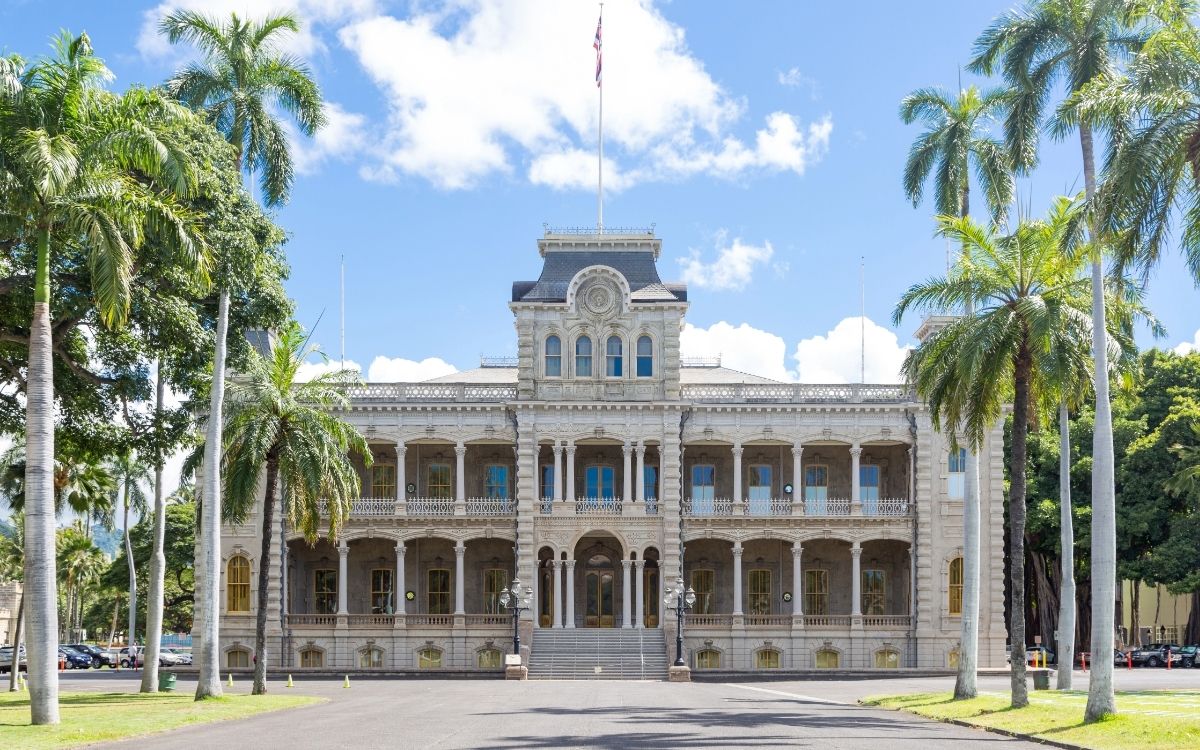
ʻIolani Palace: Symbol of Sovereignty
Completed in 1882, ʻIolani Palace showcased Hawaii's modernity with electricity and telephones installed before the White House. King Kalākaua designed it to demonstrate Hawaii was not a "primitive" kingdom but a sophisticated nation deserving respect. Today, it's the only royal palace on American soil—and the site where Hawaiian sovereignty ended.
Visit: Reserve guided tours weeks in advance. You'll wear protective booties over shoes while exploring throne rooms, state dining areas, and Queen Liliʻuokalani's imprisonment chamber.
Overthrow: Hawaii's Loss of Independence (1887-1898)
Economic Power vs. Political Sovereignty
By the 1880s, American sugar plantation owners wielded enormous economic power. When Queen Liliʻuokalani attempted to restore Hawaiian voting rights, these businessmen orchestrated an illegal coup with U.S. military support—ending Hawaii's sovereignty and paving the way for annexation.
July 1887: Bayonet Constitution
Armed militia forces King Kalākaua to sign constitution stripping royal power, restricting voting rights to property owners (disenfranchising most Hawaiians), and giving foreigners voting rights. So-named because signed under threat of force.
January 1893: The Overthrow
Queen Liliʻuokalani attempts to promulgate new constitution restoring Hawaiian rights. American businessmen form Committee of Safety. U.S. Minister orders 162 Marines to land. Queen surrenders "to avoid bloodshed" and appeals to U.S. government for justice.
1893: Cleveland's Investigation
President Cleveland's Blount Report concludes overthrow was illegal, calling it "an act of war." However, provisional government refuses to step down and Congress declines to force restoration.
July 1898: Annexation
During Spanish-American War, U.S. Congress passes Newlands Resolution annexing Hawaii as territory. No vote by Hawaiian people conducted. Native Hawaiians petition against annexation—petitions ignored.
"I, Liliʻuokalani... yield my authority until such time as the Government of the United States shall... undo the action of its representatives and reinstate me..."
— Queen Liliʻuokalani, January 17, 1893
From Territory to Statehood (1898-1959)
61 Years Without Full Rights
For six decades, Hawaii existed as a U.S. territory—American but not equal. Residents paid federal taxes without voting representation in Congress. The path to statehood involved World War II sacrifice, demographic shifts, and persistent advocacy against racial prejudice.
1900-1940: Plantation Economy
Sugar and pineapple plantations dominate, recruiting workers from Japan, China, Philippines, Portugal, and Puerto Rico. The "Big Five" corporations control Hawaii's economy. This immigration creates Hawaii's unique multicultural identity.
December 7, 1941: Pearl Harbor
Japanese attack kills 2,403 Americans, draws U.S. into WWII. Hawaii under martial law 1941-1944. Local residents serve with distinction, including the famous 442nd Regimental Combat Team. War proves Hawaii's loyalty and strategic value.
1954: Democratic Revolution
Post-war, returning veterans and labor unions organize. 1954 election transforms Hawaii politics—Democrats win overwhelming control. Leaders like Daniel Inouye advocate for statehood as path to political equality.
August 21, 1959: Statehood!
After overcoming racial prejudice and Cold War fears, Hawaii voters approve statehood 94.3% to 5.7%. President Eisenhower signs proclamation. Church bells ring across islands. American flag adds 50th star.
USS Arizona Memorial
The USS Arizona sank in nine minutes on December 7, 1941, with 1,177 crew members trapped inside. The ship remains their tomb. The memorial, dedicated in 1962, spans the sunken vessel. Oil still leaks to the surface 80+ years later—called "tears of the Arizona."
Visit: Reserve free tickets 60 days in advance online. Arrive early (7 AM opening). No bags allowed—use storage facilities. This is Hawaii's most-visited attraction for good reason.
Hawaiian Renaissance & Culture Today (1970-Present)
From Cultural Crisis to Revival
By the 1970s, Hawaiian language had fewer than 2,000 native speakers and faced extinction. What emerged—the Hawaiian Renaissance—transformed language, navigation, music, and hula through grassroots activism. Today, Hawaii balances modern American state identity with indigenous cultural preservation.
Language Revival
Crisis: By 1970, fewer than 50 children spoke Hawaiian as first language.
Solution: Pūnana Leo immersion preschools (1984) grew into K-12 programs.
Today: 24,000+ speakers, Hawaiian official state language, university degrees offered, social media adapted to Hawaiian.
Navigation Rediscovery
1976: Hōkūleʻa voyaging canoe sails from Hawaii to Tahiti—2,500 miles—using only traditional navigation (stars, waves, birds).
Impact: Proved Polynesian voyaging capabilities, inspired cultural pride, trained new navigators.
Today: Hōkūleʻa has sailed 150,000+ nautical miles, visiting ports worldwide as Hawaii's cultural ambassador.
Hula Transformation
Past: Commercialized as tourist entertainment with grass skirts and coconut bikinis.
Revival: Cultural practitioners restored hula's sacred significance. Merrie Monarch Festival (founded 1963) became "Olympics of hula."
Today: Recognized as sophisticated dance form conveying history, genealogy, and spirituality.
Sovereignty Movement
Native Hawaiians organize around sovereignty issues with diverse approaches: independence restoration, nation-within-nation status, federal recognition, and reparations for seized lands.
Impact: Hawaiian Homes Act homesteads, Office of Hawaiian Affairs, burial site protection, UN Indigenous Peoples forum participation.
Contemporary Challenges
Housing Crisis
Median home price exceeds $800,000. Many native Hawaiians priced out of homeland, creating "Hawaii diaspora" communities on mainland.
Tourism Impact
10 million annual visitors generate economic benefits but strain infrastructure, damage ecosystems, and contribute to local resentment. Post-COVID reflection on sustainable models.
Climate Change
Rising seas threaten coastal communities, warming oceans damage coral reefs. Hawaii invests heavily in renewable energy and adaptation strategies.
Cultural Preservation
Balancing economic development with cultural protection remains challenging. Native practices compete with property rights and development interests.
Experience Authentic Hawaiian Culture
Respectful ways to engage with living Hawaiian culture:
- Bishop Museum (Oahu): 3-4 hours exploring Hawaii's premier cultural institution
- Merrie Monarch Festival (Hawaii Island, April): Week-long hula competition during Easter week
- Hawaiian Language Classes: Community centers offer workshops in language, lei-making, ukulele
- Contemporary Hawaiian Musicians: Seek concerts performing in Hawaiian language
- Polynesian Voyaging Society: Visit Hōkūleʻa when docked, attend educational programs
Cultural Respect: Don't photograph sacred ceremonies without permission. Learn basic Hawaiian words (aloha, mahalo, ʻohana) and use them respectfully. Support native Hawaiian businesses and cultural practitioners.
Your Next Step: Plan Your Cultural Journey
Now that you understand the rich history of Hawaii, it's time to experience it firsthand. Transform from tourist to informed traveler by visiting the sites where this history unfolded.
Take These Actions:
- Reserve USS Arizona Memorial tickets (60 days ahead)
- Book ʻIolani Palace guided tour (limited capacity)
- Read "Shoal of Time" by Gavan Daws before traveling
- Learn 20-30 basic Hawaiian words and phrases
- Commit to respectful, responsible tourism practices
Affiliate Disclosure
This post may contain affiliate links, meaning I earn a small commission if you use the links. View our Privacy Policy and for more.
Need help planning your Hawaii trip?
Get clear, personalized guidance from a Certified Hawaii Destination Expert.
Get 1-on-1 Trip Planning HelpRECOMMENDED POSTS
Why Poipu Beach is the Best Beach on Kauai (Don’t Skip this One!)
What is the best beach on Kauai? The answer is Poipu Beach Park on the south shore. It's the most reliable choice for families and first-time...
Do You Need a Passport to Go to Hawaii?
Do you need a passport to go to Hawaii? Find out if you need a passport to travel to Hawaii for your Hawaii vacation with our informative guide. Learn about everything you need to know.
Visit Hawaii in March: Is March a Good Time to Go to Hawaii? (2026)
[dssb_sharing_buttons icon_placement="icon" columns="2" _builder_version="4.24.0" _module_preset="default" box_shadow_style_icon="preset1"...
Bryan Murphy is the creator of Hawaii’s Best Travel and host of the Hawaii’s Best Travel podcast, a top-30 U.S. travel podcast with more than 600,000 downloads. A Certified Hawaii Destination Expert, he helps visitors plan more meaningful trips to Hawaii with practical, respectful guidance. His work has been featured in Travel + Leisure, National Geographic, Yahoo!, Simple Flying, USA Today, Parents, and Fox.