


Affiliate Disclosure
This post may contain affiliate links, meaning I earn a small commission if you use the links. View our Privacy Policy and for more.

Blue Hawaii Cocktail Recipe: The Original 1957 Hilton Hawaiian Village Drink
The Story Behind the Blue Hawaii Cocktail
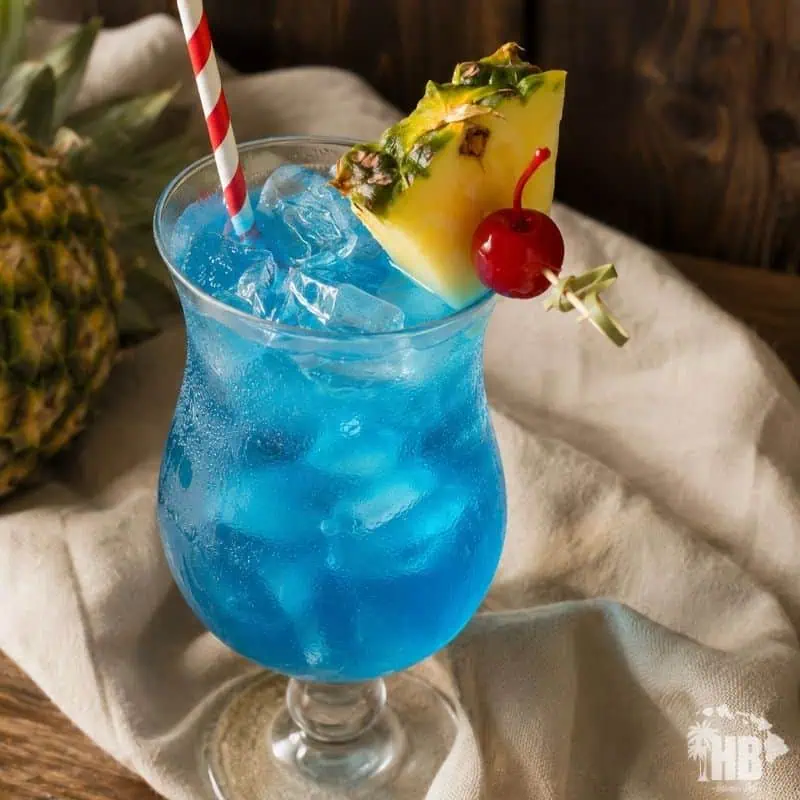
The Blue Hawaii cocktail recipe is one of those drinks that stops you the moment it lands on the bar in front of you. That electric, impossible shade of blue. The cocktail umbrella. The pineapple wedge perched on the rim. Before you even take a sip, you already feel like you are somewhere special.
I know that feeling firsthand. A few years back, my wife Ali and I were staying at the Hilton Hawaiian Village in Waikiki, right on the beach. We had just checked in, dropped our bags, and wandered down to one of the open-air bars facing the water. Ali spotted someone two seats down holding a drink that was, genuinely, the brightest shade of blue I had ever seen in a glass.
We ordered two. The bartender set them in front of us with a cocktail umbrella tucked perfectly in each, and we sat there watching the late afternoon light hit the Pacific while we sipped. Sweet, tangy, tropical, and refreshing. It was one of those perfectly uncomplicated moments that you end up carrying around for years.
That drink was the Blue Hawaii cocktail, and it was invented right there at that property in 1957. Bartender Harry Yee, working at what was then called the Kaiser Hawaiian Village, created it as a way to promote Dutch blue curaçao for the spirits company Bols. He combined blue curaçao with light rum, vodka, pineapple juice, and sweet-and-sour mix, served it in a tall glass with a cocktail umbrella, and a legend was born.
The original Blue Hawaii cocktail recipe uses both light rum and vodka at 3/4 oz each. That is one thing a lot of home recipes get wrong. They use full ounce pours or omit one spirit entirely. The equal, slightly restrained spirit base is what keeps the drink refreshing rather than boozy. The blue color comes entirely from the blue curaçao liqueur, which is made from the dried peel of the laraha citrus fruit on the island of Curaçao. No blue food coloring needed, ever.
It is also worth clarifying: the Blue Hawaii and the "Blue Hawaiian" are two different drinks. The Blue Hawaiian adds cream of coconut, making it richer and more like a blue piña colada. The original Blue Hawaii does not have cream of coconut. Both are delicious, but they are distinct. I cover both in the Variations section below.
The authentic Blue Hawaii cocktail recipe, invented by bartender Harry Yee in 1957 at the Hilton Hawaiian Village, calls for 3/4 oz light rum, 3/4 oz vodka, 1/2 oz blue curaçao, 3 oz pineapple juice, and 1 oz sweet-and-sour mix (or 1/2 oz fresh lemon juice plus 1/2 oz simple syrup). Shaken with ice and strained over crushed ice. No food coloring required.
I have made this drink dozens of times since that afternoon in Waikiki. The version I have landed on stays true to Harry Yee's original proportions. The recipe calls for sweet-and-sour mix, and when you are making it at home the cleanest swap is 1/2 oz fresh lemon juice plus 1/2 oz simple syrup. That homemade sour mix is brighter and less artificial than the bottled stuff, and it matches exactly what the resort bars use today.
Whether you are recreating that Hilton Hawaiian Village feeling at home or making a batch for a luau night with friends, this is the blue Hawaii cocktail recipe to use. Let me walk you through every step.
If you are visiting the resort, you can order the classic blue Hawaii cocktail exactly where it was born. Today you will find it on the menus at the Hau Tree Bar, Tropics Bar & Grill, and Tapa Bar — all within the Hilton Hawaiian Village in Waikiki. The drink has never left the menu since Harry Yee created it in 1957.
How to Make the Original Blue Hawaii Cocktail Recipe at Home
The Blue Hawaii cocktail recipe looks complicated at first glance, but it is genuinely one of the easiest tropical drinks you can make at home. You do not need professional bartending skills. You do not need exotic equipment. You need a shaker, a strainer, a good hurricane glass, and five solid minutes.
The three things that make or break this cocktail recipe are your blue curaçao quality, the freshness of your sour mix, and your shaking technique. Get those right and the rest takes care of itself. I have made this drink for backyard luau nights, birthday parties, and quiet evenings just because it feels celebratory. Every single time, someone asks for the recipe.
One important note before you start: the authentic Hilton recipe uses both light rum and vodka at 3/4 oz each, not full ounce pours. That restrained spirit base is intentional. It keeps the drink light, refreshing, and tropical rather than boozy. If you have ever had a Blue Hawaii that tasted flat or one-dimensional, chances are someone left out one of the two spirits.
The original recipe also calls for sweet-and-sour mix, not lime juice. At home, the best version of that is 1/2 oz fresh lemon juice plus 1/2 oz simple syrup, mixed together before adding. That combination gives you the classic bright-tart balance Harry Yee built into the original without relying on a bottled sour mix. The pineapple juice is 3 oz, which grounds the drink with tropical sweetness and body, and the blue curaçao is 1/2 oz, just enough for that signature electric color.
3/4 oz light rum + 3/4 oz vodka + 1/2 oz blue curaçao + 3 oz pineapple juice + 1 oz sweet-and-sour mix (or 1/2 oz fresh lemon juice + 1/2 oz simple syrup). Shake with ice, strain over crushed ice, garnish with a pineapple wedge and cocktail umbrella. That is the complete Blue Hawaii cocktail recipe as served at the Hilton Hawaiian Village today.
Whether you are following along for the first time or you have made this drink before and want to refine your technique, I walk through every step in the instructions section below. There is also a built-in 15-second shake timer so you do not have to count in your head. Scroll down to the Step-by-Step Instructions or use the Jump to Recipe button at the top of the page.
Blue Hawaii vs Blue Hawaiian: What Is the Difference?
This is one of the most common questions I get about this drink, and it is a genuinely useful distinction to understand. The Blue Hawaii and the Blue Hawaiian are two different cocktails. They share a name, a color, and a tropical personality, but their ingredients and flavor profiles are not the same.
The Blue Hawaii is the original. Harry Yee invented it in 1957 at the Kaiser Hawaiian Village (now the Hilton Hawaiian Village in Waikiki) to promote Bols blue curaçao liqueur. His recipe uses 3/4 oz light rum, 3/4 oz vodka, 1/2 oz blue curaçao, 3 oz pineapple juice, and 1 oz sweet-and-sour mix. It is crisp, tangy, refreshing, and medium-bodied. It tastes tropical without being heavy or overly sweet. The finish is clean with a bright citrus note from the sour mix.
The Blue Hawaiian cocktail came later and differs in one critical ingredient: it adds cream of coconut. That addition changes everything. The cream of coconut makes the drink richer, creamier, and considerably sweeter. The texture moves from light and refreshing toward something closer to a blended piña colada. It is more indulgent and slightly higher in calories. Many people love it, but it is a different drink than the original.
A secondary difference is the spirit base. The Blue Hawaiian version often uses only rum, skipping the vodka that defines the original Blue Hawaii. Some versions also omit the lime juice entirely, relying solely on the pineapple juice and cream of coconut for the liquid base. The result is sweeter and less tangy.
Blue Hawaii (Authentic 1957 Hilton Recipe)
- 3/4 oz light rum + 3/4 oz vodka base
- 1/2 oz blue curaçao for color and citrus flavor
- 1 oz sweet-and-sour mix (or fresh lemon + simple syrup)
- 3 oz pineapple juice
- No cream of coconut
- Light, crisp, refreshing texture
- Approx. 185 calories per serving
Blue Hawaiian (Cream of Coconut Version)
- Usually rum only (no vodka)
- Adds cream of coconut (Coco Lopez)
- Richer, creamier, sweeter profile
- Similar to a blue piña colada in texture
- Often blended rather than shaken
- Approx. 265 calories per serving
So which one should you make? If you want the authentic Hilton Hawaiian Village experience, the one Harry Yee actually created, you want the Blue Hawaii. If you want something richer and more dessert-like, the Blue Hawaiian cocktail with cream of coconut is a fantastic choice. Both are covered in the Recipe Variations section below, so you can make either one with confidence.
The confusion between the two names is understandable. Both drinks share that electric blue color from blue curaçao, both use pineapple juice, and both are served in tropical-style glasses with elaborate garnishes. But once you taste them side by side, the difference is immediately obvious. The original Blue Hawaii is cleaner and more drinkable by the glass. The Blue Hawaiian is richer and more of an occasion cocktail.
Can You Make a Blue Hawaiian Cocktail with Malibu Rum?
Yes, and it is genuinely delicious. Substituting Malibu coconut rum for the light rum in the blue hawaiian cocktail recipe is one of the most popular modern variations, and for good reason. The coconut flavor in Malibu adds a soft, creamy undertone that plays beautifully with the pineapple juice and blue curaçao.
To make a Malibu version, simply replace the 3/4 oz of light rum with 3/4 oz of Malibu coconut rum. Keep the 3/4 oz vodka, 1/2 oz blue curaçao, 3 oz pineapple juice, and 1 oz sweet-and-sour mix. The result is a slightly sweeter, creamier blue hawaii drink with a notable coconut aroma. It is not the 1957 original, but it is a crowd-pleasing variation that goes especially well at beach parties and summer cookouts.
If you want to go even further in the coconut direction, skip the vodka entirely and use 1.25 oz of Malibu. That version edges closer to the Blue Hawaiian with cream of coconut, but without the added heaviness of the cream. It sits somewhere between the two classic versions: lighter than a Blue Hawaiian, more tropical than a straight Blue Hawaii. A great middle-ground option if you are serving guests who prefer sweeter drinks.
One note on the color: Malibu is white and cloudy, which can slightly soften the vivid blue of the curaçao. The drink will still look beautifully blue, just a shade or two lighter than the original. If the electric blue color is important to you, add the blue curaçao last and do not shake too aggressively. A good hard 15-second shake still works, but you will notice the color is a softer teal-blue rather than the deep cobalt of the original recipe.
Equipment You Will Need
Ingredients
Shop the Tools on Amazon
As an Amazon Associate I earn from qualifying purchases.
Kitchen Converter
Cocktail Measurement Converter
Step-by-Step Instructions
Fill your hurricane glass or Collins glass with ice and let it sit while you prepare the cocktail. A cold glass keeps your blue Hawaii cocktail colder, longer.
This is the first thing I do every single time. Two minutes of patience pays off with every sip.
The original recipe calls for 1 oz of sweet-and-sour mix. If you are making it fresh, combine 1/2 oz fresh lemon juice with 1/2 oz simple syrup and stir until combined. This takes about 60 seconds and makes a noticeably brighter, cleaner sour mix than anything from a bottle.
If you are using bottled sour mix, measure out 1 oz and you are good to go. The homemade version is better, but either works in the recipe.
Add ice to your cocktail shaker until it is about two-thirds full. Pour in the pineapple juice and sweet-and-sour mix first, then add the 3/4 oz light rum and 3/4 oz vodka. Pour the 1/2 oz blue curaçao in last.
Seal the shaker and shake hard for 15 seconds. The shaker should feel very cold in your hands by the time you stop. That is how you know the drink is properly chilled and diluted.
Dump the ice you used to chill the glass and replace it with fresh ice, either cubed or crushed. Strain the cocktail over the fresh ice using your cocktail strainer.
Fresh ice means your drink stays colder without diluting further. The blue color also stays clearer and more vibrant over fresh ice.
Add a fresh pineapple wedge on the rim, a maraschino cherry, and a cocktail umbrella. A lime wheel is a nice optional touch. Add a colorful straw if you like.
Serve immediately. This cocktail is meant to be enjoyed right away, with good company and somewhere warm.
Why You Will Love It
- Ready in under 5 minutes
- The most stunning blue color of any cocktail
- True to the 1957 original Hilton Hawaiian Village recipe
- Perfectly balanced tropical flavor
- Crowd-pleaser for parties and luau nights
- Easy to scale to a pitcher
Things to Keep in Mind
- Blue curaçao can be hard to find at smaller stores
- Requires fresh lime for best results
- Contains both rum and vodka, so it is stronger than it tastes
- Not suitable for everyone
Nutritional Information
Approximate values per serving (1 cocktail, approximately 6.25 oz finished). Values vary based on exact brands and proportions used.
Recipe Variations
The Classic Blue Hawaii (Authentic 1957 Hilton Recipe)
This is the authentic blue Hawaii cocktail recipe as Harry Yee created it at the Kaiser Hawaiian Village (now the Hilton Hawaiian Village) in 1957. The drink is still served today at the resort's Hau Tree Bar, Tropics Bar & Grill, and Tapa Bar using these exact proportions.
- 3/4 oz light rum (white rum — Bacardi Superior)
- 3/4 oz vodka
- 1/2 oz blue curaçao liqueur (Bols Blue was the original)
- 3 oz pineapple juice (Dole 100% or freshly squeezed)
- 1 oz sweet-and-sour mix (or 1/2 oz fresh lemon juice + 1/2 oz simple syrup)
- Shake all ingredients with ice, strain into a tall glass over crushed ice
- Garnish: pineapple wedge and cocktail umbrella
The Blue Hawaiian (Cream of Coconut Version)
The Blue Hawaiian is often confused with the Blue Hawaii cocktail, but they are different drinks. The Blue Hawaiian adds cream of coconut, making it richer and creamier, similar to a blue piña colada. It is delicious, just not the original. This is for when you want something more indulgent.
- 3/4 oz light rum (or 1.25 oz rum if skipping vodka)
- 1 oz blue curaçao liqueur
- 2 oz pineapple juice
- 1 oz cream of coconut (Coco Lopez or similar)
- 1/2 oz fresh lime juice
- Blend with ice or shake and strain over crushed ice
- Same garnish as the original
- Richer, creamier, and slightly higher in calories (~265)
Vodka-Only Blue Hawaii
Many modern recipes skip the rum entirely and use vodka as the sole spirit. This version is cleaner and lighter in flavor, letting the blue curaçao and pineapple take center stage. A great option if you prefer vodka-based cocktails or do not keep rum on hand.
- 2 oz vodka (replaces the 3/4 oz rum + 3/4 oz vodka split from the original)
- 1/2 oz blue curaçao liqueur
- 3 oz pineapple juice
- 1 oz sweet-and-sour mix (or 1/2 oz fresh lemon juice + 1/2 simple syrup)
- Shake with ice and strain over fresh ice
- Lighter flavor profile, slightly less complex but still refreshing
Mocktail Blue Hawaii (Virgin Version)
This alcohol-free version captures the vivid color and tropical flavor of the original. I serve this alongside the full version at parties so everyone has something special to sip. Butterfly pea flower tea naturally produces a deep blue color that works beautifully here.
- 4 oz pineapple juice
- 1 oz brewed butterfly pea flower tea (chilled, provides the blue color)
- 1 oz fresh lime juice
- 1/2 oz blue raspberry syrup or blue sports drink concentrate
- 1/4 oz simple syrup (adjust to taste)
- Shake with ice and strain into a glass over fresh ice
- Same garnish: pineapple, cherry, umbrella
- Approx. 80-100 calories per serving
Party Pitcher Blue Hawaii (Serves 8)
This is my go-to for luau nights, summer parties, and any gathering where you want something that looks spectacular. Mix everything in a large pitcher, keep it chilled, and pour over individual glasses of ice when you are ready to serve. Your guests will be talking about that color all night.
- 6 oz light rum (3/4 oz × 8 servings)
- 6 oz vodka (3/4 oz × 8 servings)
- 4 oz blue curaçao liqueur (1/2 oz × 8 servings)
- 24 oz pineapple juice (3 oz × 8 servings)
- 8 oz sweet-and-sour mix — or 4 oz fresh lemon juice + 4 oz simple syrup
- Mix all ingredients in a large pitcher, refrigerate up to 2 hours before serving
- Pour over individual glasses of fresh ice, do not mix ice into the pitcher
- Garnish each glass individually for full effect
Frequently Asked Questions
This is the most common point of confusion around this drink, and it is worth clearing up properly.
The Blue Hawaii is the original 1957 recipe by bartender Harry Yee at the Hilton Hawaiian Village. It uses 3/4 oz light rum, 3/4 oz vodka, 1/2 oz blue curaçao, 3 oz pineapple juice, and 1 oz sweet-and-sour mix. It is bright, refreshing, and spirit-forward.
The Blue Hawaiian is a variation that adds cream of coconut, making the drink richer and creamier, similar to a blue piña colada. It is delicious but distinctly different in texture and sweetness.
If you order a "Blue Hawaii" at the Hilton Hawaiian Village bar, you will receive the original version. If someone hands you a thick, creamy blue drink, that is likely the Blue Hawaiian version.
The Blue Hawaii cocktail was invented in 1957 by bartender Harry Yee at the Kaiser Hawaiian Village in Waikiki, which later became the Hilton Hawaiian Village.
Harry Yee was already a legendary figure in Hawaii's cocktail culture when he created the drink. He was approached by a representative from the Dutch spirits company Bols to create a new cocktail that would feature their blue curaçao liqueur and help promote it to tourists in Hawaii.
Yee combined blue curaçao with rum, vodka, pineapple juice, and sweet and sour, served it in a tall glass, and added a cocktail umbrella for presentation. The drink became an instant sensation at the property. Harry Yee went on to work as a bartender at the Hilton Hawaiian Village for decades and is widely credited as the creator of this iconic drink.
No food coloring is used or needed in a proper Blue Hawaii cocktail. The blue color comes entirely from the blue curaçao liqueur.
Blue curaçao is an orange-flavored liqueur made from the dried peel of the laraha citrus fruit grown on the Caribbean island of Curacao. The base liqueur is clear or light orange in color, but producers add blue food dye to the curaçao itself to achieve the striking blue hue.
So while the blue color in your glass does technically involve food dye, it is inside the curaçao liqueur, not something you add separately. Any recipe that tells you to add blue food coloring to a glass is doing something wrong. Just buy good blue curaçao and you will have a beautiful, naturally blue cocktail.
The original 1957 Blue Hawaii cocktail recipe uses both light rum and vodka. This is the detail most home recipes get wrong.
Harry Yee's original uses 3/4 oz each of light rum and vodka. The equal, slightly restrained pour keeps the drink refreshing rather than boozy, with the rum providing tropical warmth and the vodka contributing clean spirit-forward strength.
Many modern recipes simplify to either rum-only or vodka-only. Both taste good. But if you want to recreate the authentic 1957 Hilton Hawaiian Village experience, you need both spirits. That is the version I make at home, and it is the version I recommend in this recipe.
The 1961 Elvis Presley film "Blue Hawaii" helped cement the cultural connection between the cocktail and the islands, even though the drink pre-dates the film by four years.
The movie, set and filmed largely in Hawaii, featured Elvis as a recently returned Army man exploring romance and island life. It was a massive box office success and helped spark a wave of mainstream American interest in Hawaiian culture and tourism in the early 1960s.
The shared name between the cocktail and the film is often cited as contributing to the drink's lasting fame beyond Hawaii. When tourists came to the islands wanting a taste of that Elvis-era magic, the blue Hawaii cocktail was waiting for them at hotel bars across Waikiki. Harry Yee's creation was already four years old and well-established by the time the film was released.
The traditional and most visually effective glass for a Blue Hawaii cocktail is a hurricane glass. The tall, curved shape showcases that vivid blue color beautifully and provides plenty of room for ice and garnish.
A Collins glass is an equally good substitute. Both are 12-16 oz, tall enough to hold the drink, ice, and garnish comfortably.
Avoid using a short rocks glass or a wide coupe. The height of the glass is part of what makes the visual presentation work. When Ali and I had them at the Hilton Hawaiian Village, they came in tall glasses that let you admire the color all the way through the drink.
Yes, absolutely. The Blue Hawaii cocktail scales beautifully for batch preparation.
Mix all the liquid ingredients (rum, vodka, blue curaçao, pineapple juice, lime juice, and optional simple syrup) in a large pitcher or sealed bottle. Refrigerate for up to 4 hours before serving. Do not add ice to the pitcher itself, as it will dilute the drink as it sits.
When guests arrive, pour over individual glasses filled with fresh ice and add garnishes per glass. The blue color actually looks more dramatic when it hits fresh cold ice. I have made the Party Pitcher version for luau nights with 8 people and it disappears quickly. See the Variations section above for exact quantities.
Storage, Pairings, and Tips
Batch Mix (No Ice)
Pre-mixed liquid base keeps in the refrigerator for up to 4 hours. Do not add ice until serving. The blue color stays vibrant when kept cold.
Fresh Lime Juice
Freshly squeezed lime juice is best used within 24 hours. Store covered in the fridge and squeeze fresh when possible for maximum brightness.
Blue Curaçao
An opened bottle of blue curaçao keeps at room temperature for 1-2 years. Store away from direct sunlight to preserve the color and flavor.
Serve Immediately
A finished Blue Hawaii cocktail is best enjoyed within minutes. Ice dilution and color shifting happen quickly once poured.
Common Mistakes to Avoid
- Adding blue food coloring: Never. The blue color comes from the curaçao itself. Adding separate food dye is a sign the recipe is wrong.
- Skipping the vodka: The original recipe has both rum and vodka. Leaving out one of them creates a noticeably different drink.
- Using bottled lime juice: It tastes flat and chemical. Fresh lime is quick to squeeze and makes a dramatic difference.
- Over-sweetening: The blue curaçao and pineapple juice are already sweet. Taste the drink before adding any syrup.
- Skimping on the garnish: The cocktail umbrella and pineapple wedge are what make this drink a visual moment. Do not skip the presentation.
- Shaking too briefly: A proper 15-second vigorous shake is what chills and integrates everything correctly. A few half-hearted shakes leaves the drink uneven in flavor.
Perfect Pairings
Your Personal Notes
Write your own modifications, brand preferences, or memories about making this recipe. Notes save automatically in your browser.
Notes saved!
Rate This Recipe
Share This Recipe
Did you make the Blue Hawaii cocktail? Share it and spread the aloha spirit!
RECOMMENDED POSTS
The Royal Hawaiian Mai Tai Recipe: Bring Waikiki’s Iconic Hawaiian Drink Home
The Royal Hawaiian mai tai from Waikiki’s legendary Mai Tai Bar. Light rum, a dark rum float, pineapple juice, and orgeat. Ready in 5 minutes.

Lilikoi (passion fruit) Margarita Recipe: Easy Hawaiian-Inspired Cocktail
This post may contain affiliate links, meaning I earn a small commission if you use the links. View our Privacy Policy and for more.RECOMMENDED POSTS
Monkeypod Mai Tai Recipe: Just Like Monkeypod Kitchen (Copycat)
RECOMMENDED POSTS
Bryan Murphy is the creator of Hawaii's Best Travel and host of the Hawaii's Best podcast, a top-30 U.S. travel podcast with 700,000+ downloads and a 4.9-star rating from 280+ reviews on Apple Podcasts. A Certified Hawaii Destination Expert and member of the Hawaii Visitors & Convention Bureau, he helps visitors plan more meaningful trips to Hawaii with practical, respectful guidance. His work has been featured in Travel + Leisure, National Geographic, Yahoo!, Simple Flying, USA Today, Parents, and Fox.