

Maui Just Banned 6,200 Vacation Rentals 5-3 on Bill 9: Here’s What It Means for Your Trip

Audio overview on Maui's Bill 9
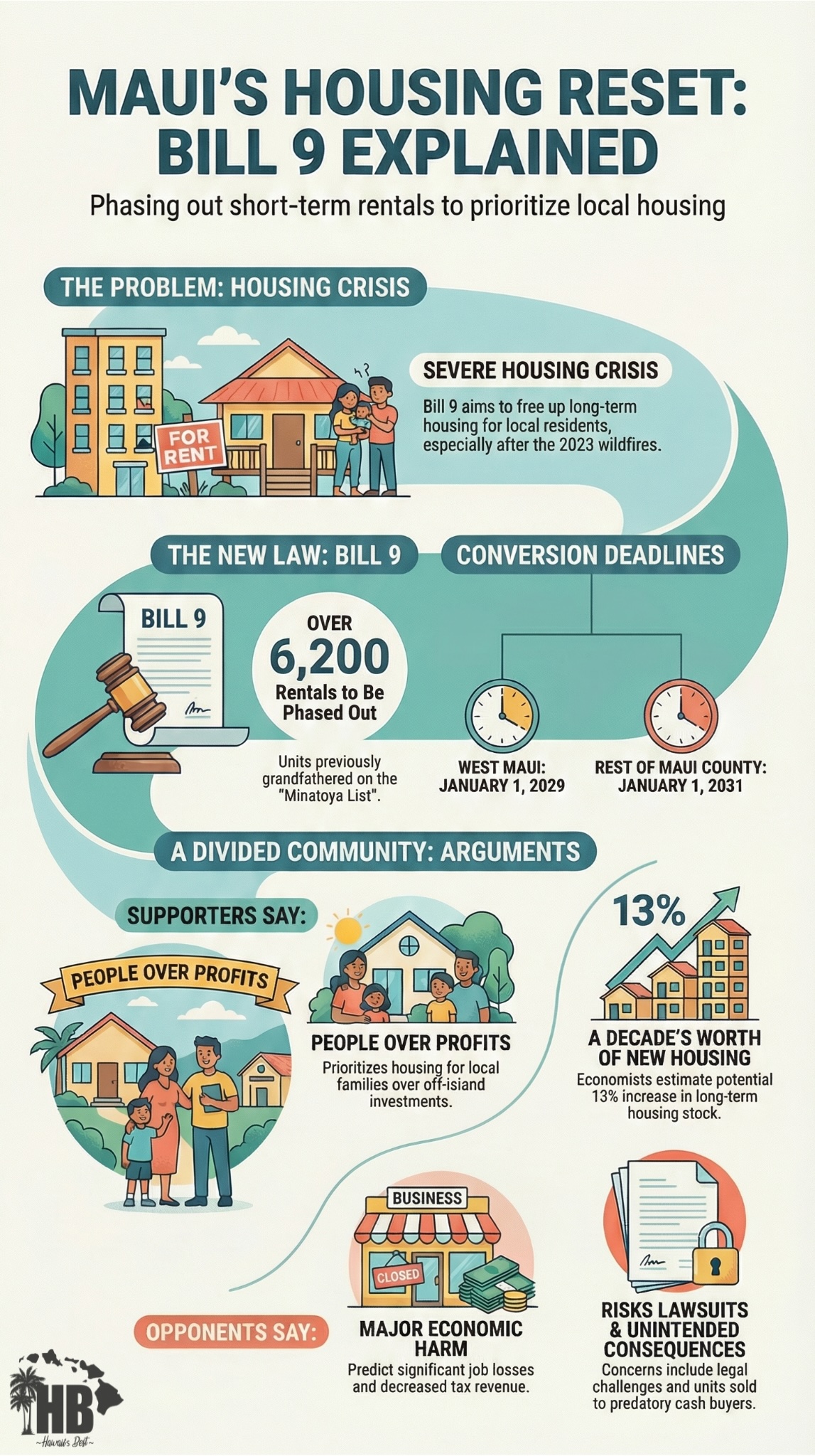
WAILUKU – Maui County Council passed Bill 9 on December 15, 2025, launching a historic phase-out of over 6,200 short-term vacation rentals in apartment-zoned areas.
Mayor Richard Bissen signed the controversial legislation into law the same day, marking a major shift in how visitors can book accommodations on the Valley Isle. The Maui vacation rental ban aims to convert these properties into long-term housing for local residents, especially those displaced by the devastating August 2023 wildfires that destroyed much of Lahaina.
The 5-3 vote divided the community between those prioritizing local housing needs and those worried about economic impacts on Maui’s tourism industry. Council members Tamara Paltin, Nohe Uʻu-Hodgins, Keani Rawlins-Fernandez, Gabe Johnson, and Yuki Lei Sugimura Kama voted in favor, while Alice Lee, Tom Cook, and one other member opposed the measure.
Timeline: When the Maui Vacation Rental Phase-Out Takes Effect
The ban doesn’t happen overnight, which is good news for travelers with upcoming bookings. West Maui properties must convert to long-term rentals by January 1, 2029. Properties in South Maui and other areas have until January 1, 2031 to make the transition.
This gives current vacation rental owners several years to transition their properties and plan their next steps. It also means travelers can still book these rentals for the next few years, though availability may decrease as the deadlines approach and some owners choose to exit the market early.
The staggered timeline reflects the urgency in West Maui, where the Lahaina fires created the most acute housing shortage. Over 12,000 residents were displaced by the August 2023 disaster, and many are still searching for permanent housing nearly two years later.
What Properties Are Affected by Bill 9?
The legislation specifically targets short-term rentals operating in apartment-zoned districts under the “Minatoya List” exemption. This 1991 legal interpretation allowed residential apartments to function as vacation rentals for decades, creating what many locals saw as a loophole that prioritized tourist accommodations over resident housing.
About 94% of these affected properties are owned by people who don’t live in Maui County, according to Civil Beat’s reporting. This statistic became a rallying point for supporters who argued the ban would keep housing and economic benefits within the local community rather than flowing to mainland investors.
The county estimates losing $65 million in property taxes and $50 million in other tax revenue annually once the phase-out is complete. This financial impact is one reason why three council members voted against the measure, expressing concerns about the county’s ability to fund essential services.
The Economic Debate: Tourism vs. Housing
The financial stakes are enormous on both sides of this debate. Maui’s economy depends heavily on tourism, which generates billions of dollars annually and employs thousands of residents. Vacation rentals have been a significant part of that ecosystem, offering visitors more space and amenities than traditional hotels.
But the housing crisis has reached a breaking point. Local families earning median incomes can’t compete with vacation rental investors paying cash for properties. Teachers, healthcare workers, and service industry employees—the backbone of Maui’s community—have been priced out of the housing market entirely. Some have left the island, while others live in overcrowded conditions or face long commutes from more affordable areas.
Supporters of Bill 9 argue that converting 6,200+ units to long-term housing is equivalent to a decade’s worth of new construction. That’s significant on an island where building new housing is expensive, time-consuming, and limited by geography and infrastructure constraints.
Opponents counter that many vacation rental units are “purpose-built” for short-term stays and may not be suitable or affordable for long-term residents. They worry about unintended consequences, including the possibility that large corporate buyers like Blackstone could swoop in and purchase properties instead of local families.
Where Visitors Can Still Stay on Maui
Don’t cancel your Maui vacation plans just yet. The island still has plenty of accommodation options that aren’t affected by the ban, and you’ll likely notice little difference in your travel experience.
Approximately 6,500 vacation rental parcels in hotel-zoned areas will continue operating normally. These properties were always legally designated for visitor accommodations and aren’t part of the phase-out. Thousands of hotel rooms, over 2,400 timeshares, and bed-and-breakfast properties remain available for travelers across the island.
Popular resort areas like Wailea, Kihei, and Ka’anapali won’t see major changes to their vacation rental inventory. These areas were already zoned for tourism and will continue to welcome visitors as they always have. If you’ve stayed in these areas before, you’ll find the same types of accommodations available.
A county-appointed Temporary Investigative Group has also proposed creating new “Hotel Districts” (H-3 and H-4 zones) that could allow 4,519 of the affected properties to apply for rezoning. If approved through this process, these properties could continue operating as short-term rentals legally. However, this compromise remains controversial, with some council members calling it an “afterthought” that should have been part of the original bill.
Why Maui Passed This Controversial Law
The housing crisis on Maui reached a breaking point after the Lahaina wildfires displaced more than 12,000 residents in a single day. Survivors found themselves competing for scarce rental housing in a market already stretched thin by decades of vacation rental conversions.
Community groups like Lahaina Strong and the Office of Hawaiian Affairs strongly supported the bill, framing it as “people over profits.” They argue that housing should serve the people who live, work, and raise families on Maui rather than generating income for off-island investors. The phrase became a rallying cry during months of public testimony and debate.
Native Hawaiian advocates pointed out that the housing crisis threatens the survival of generational communities. When local families can’t afford to stay, the cultural fabric of the island unravels. Schools close, businesses struggle to find workers, and the authentic Hawaiian culture that visitors come to experience gradually disappears.
Opponents, including the Realtors Association of Maui and travel giant Expedia Group, warn the law could trigger expensive lawsuits and economic damage. They question whether vacation rental units are suitable for long-term housing and worry about job losses in property management, cleaning services, and related industries that support the short-term rental market.
Legal Challenges Expected
Maui County anticipates lawsuits claiming the ban violates the Fifth Amendment’s protection against government taking of property without compensation. Property owners argue they purchased their units with the legal right to operate as vacation rentals, and the county is now stripping away that right without paying fair market value.
These legal battles could take years to resolve and may ultimately determine whether the law stands. The county’s legal team is preparing for this fight, but the outcome remains uncertain. Similar vacation rental restrictions in other communities have faced mixed results in court, with some upheld and others struck down.
The financial cost of defending these lawsuits could be substantial, adding another layer of controversy to an already divisive issue. Critics argue the county should have anticipated these legal challenges and structured the bill differently to withstand constitutional scrutiny.
What This Means for Your Hawaii Trip
Planning a Maui vacation in 2026-2028? You’ll still find plenty of vacation rental options, especially in resort areas and hotel-zoned districts. Book sooner rather than later as inventory may tighten approaching the 2029 and 2031 deadlines. Some property owners may exit the market early rather than wait for the phase-out dates.
Looking at 2030 and beyond? Focus on hotel-zoned vacation rentals, traditional hotels, or properties that successfully rezone under the proposed H-3/H-4 districts. Check property listings carefully to ensure they’re in compliant zones. Booking platforms like Airbnb and VRBO will likely update their listings to reflect which properties can legally operate past the deadlines.
Want to support local communities? Consider staying at locally-owned hotels or bed-and-breakfasts that directly benefit Maui residents. Your tourism dollars can still support the island’s economy while respecting the community’s housing needs. Many local operators offer authentic Hawaiian hospitality and cultural experiences you won’t find at chain resorts.
Already have a booking? Contact your property owner or booking platform to confirm your reservation isn’t affected. Most bookings through 2028 should be fine, but it’s worth verifying, especially for West Maui properties approaching the 2029 deadline.
For the latest updates on Maui accommodations and travel planning, visit Hawaii’s Best Travel for expert guidance on your Valley Isle vacation.
FAQs for Maui Vacation Rental Ban
Will my existing Maui vacation rental booking be canceled because of Bill 9?
No, your existing booking is safe. Bill 9 doesn’t take effect until January 1, 2029 for West Maui properties and January 1, 2031 for the rest of Maui County. Any reservations you have before these dates will be honored. The phase-out only affects properties in apartment-zoned districts, and approximately 6,500 vacation rentals in hotel-zoned areas will continue operating normally even after the deadlines.
Can I still book vacation rentals on Maui after 2029?
Yes, you’ll still have plenty of vacation rental options. The ban only affects 6,200 properties in apartment-zoned areas. Thousands of vacation rentals in hotel-zoned districts, along with hotels, timeshares, and bed-and-breakfasts, will continue to welcome guests. Popular resort areas like Wailea, Kihei, and Ka’anapali won’t see major changes. Additionally, up to 4,519 properties may be able to rezone into new “Hotel Districts” and continue operating as short-term rentals.
How do I know if my vacation rental is affected by the Maui ban?
Properties affected by Bill 9 are short-term rentals operating in apartment-zoned districts under the “Minatoya List” exemption. If you book the same Maui condo every year, contact the property owner or check with your booking platform (Airbnb, VRBO, etc.) to confirm the property’s zoning status. Properties in hotel-zoned areas are not affected. West Maui properties must convert by January 1, 2029, while South Maui and other areas have until January 1, 2031.
Why did Maui pass Bill 9 to phase out vacation rentals?
Bill 9 addresses Maui’s critical housing shortage, which became desperate after the August 2023 Lahaina wildfires displaced over 12,000 residents. The law corrects a 1991 zoning exemption that allowed apartment-zoned properties to operate as vacation rentals instead of housing local families. With 94% of affected properties owned by non-residents, the county aims to convert these 6,200+ units into long-term housing for teachers, healthcare workers, and other residents who’ve been priced out of the market.
RECOMMENDED POSTS

Big Island Name Change: What Hawaii Travelers Need to Know
[dssb_sharing_buttons icon_placement="icon" columns="2" _builder_version="4.24.3" _module_preset="default" box_shadow_style_icon="preset1"...

Hawaii Travel in 2026: What Visitors Need to Know Before Booking
Planning a trip to Hawaii in 2026 looks different than it did just a few years ago. Reservation systems, new visitor laws, safety concerns, and...
New Hawaii Visitor Laws That Every Tourists Must Know for 2026
[dssb_sharing_buttons icon_placement="icon" columns="2" _builder_version="4.24.3" _module_preset="default" box_shadow_style_icon="preset1"...
Bryan Murphy is the creator of Hawaii’s Best Travel and a Certified Hawaii Destination Expert through the Hawai‘i Visitors Bureau. He’s an active member of the Hawai‘i Visitors and Convention Bureau and continues ongoing education focused on Hawaiian culture, history, and sustainable travel. As the host of the “Hawaii’s Best Travel” podcast—one of the top travel podcasts in the U.S.—Bryan shares practical, respectful guidance to help visitors experience Hawai‘i in a more meaningful way. His work reaches nearly half a million people across podcast, blog, and social media.