What Happened to This Maui Family’s 990 Acres?
Before you scroll, I sometimes share links for Hawaii spots I genuinely recommend. No extra cost to you, it just supports the site. Read our affiliate disclosure for info.
Listen to the Full Podcast Episode:
Or listen on your favorite platform:



Most people know Hana, Maui, for its winding roads, waterfalls, and coastal views. But for Native Hawaiian journalist and author Sara Kehaulani Goo, Hana holds a much deeper story.
While researching her family’s history, Sara discovered something remarkable. Land originally granted to her ancestor in 1848 once covered 990 acres. Her grandmother’s parcel was just 10 acres. What happened to all that land?
That question led Sara on a journey through 175 years of family history, Hawaiian land ownership, and the meaning of kuleana, a Hawaiian concept of responsibility that goes much deeper than simply taking care of something.
In this episode of Hawaii’s Best, Sara shares what she uncovered while writing her book Kuleana and why understanding Hawaii’s history can completely change how you experience the islands.
What you'll discover in this episode:
- From 990 acres to just 10. What Sara uncovered in her family’s old documents, and the history behind those numbers.
- The 1848 decision that changed Hawaii forever. How the Great Mahele reshaped land ownership and why its impact is still felt today.
- The centuries-old Hawaiian site most visitors know little about. What a massive heiau near Hana reveals about the islands’ history.
- Why kuleana means more than responsibility. What Sara learned about caring for ancestral land and passing that responsibility to future generations.
- What most visitors miss when watching hula. Why understanding the stories behind the dance makes such a difference.
- How knowing Hawaii’s history can change your next visit. The places and cultural experiences Sara encourages visitors to explore.
Help Other Hawaii Enthusiasts Find the Podcast!
- If this episode resonated with you, or you know someone who needs to hear it, please share.
- Leave the podcast a review in Apple Podcasts and let us know what topics you would like to hear.
- Don’t miss an episode—follow the podcast on Apple Podcasts, Spotify, or RSS.
- Watch podcast episodes on YouTube.
Join us each week for practical Hawaii travel tips, local stories, and cultural insights to help you plan a better trip to the islands.
Please follow on your favorite podcast platform:




Looking for more Hawaii travel tips? Click here to browse all episodes of the Hawaii’s Best Travel podcast.
Has the podcast been helpful for you? Please leave a review here. Even one sentence helps!
Transcript
275_How One Maui Family’s Land Went From 990 Acres to Just 10
[00:00:00] 990 Acres to 10
[00:00:00] Bryan Murphy: Coming up on What is Best?
[00:00:02] Sara Kehaulani Goo: The amazing thing I found was that my grandmother’s 10 acres of land in Hana Maui was once 990 acres. And that for me became the story. How does 990 acres become 10 acres?
[00:00:16] Bryan Murphy: 990 acres down to just 10. How does that even happen? Well, that’s what Sarah wanted to find out and research and what she uncovered goes way beyond just her family’s land in Hauna.
[00:00:30] Bryan Murphy: It’s a pretty fascinating piece of Hawaiian history and one that I think changes how we look at the islands even today.
[00:00:39] Meet Sarah and Hana
[00:00:39] Bryan Murphy: Aloha and welcome to Hawaii’s Best. I’m Brian Murphy, a Hawaii destination expert and your personal guide to planning a better Hawaii trip. Through practical tips, local voices, and stories from the islands, I’ll help you make the most of your time in Hawaii and stay connected between visits.
[00:00:56] Bryan Murphy: So when you think about Hana on the beautiful island of Maui, you probably think about Rodana, obviously, right? You got the waterfalls, windy rows, one way. Should you drive it? Should you not drive it? All the stops along the way. Incredible views. But today’s guest has a very different connection to Hana.
[00:01:15] Bryan Murphy: Sarah Keyalani-Gu is a native Hawaiian journalist and author of Kuliana. She’s worked at some of the biggest news corporations in the country, including the Washington Post, and actually grew up in Southern California, but her family roots run deep in Hana going all the way back some 175 years. And when she started digging into her family’s history, she uncovered a story about land ownership in Hawaii that I really hadn’t heard explained like this before.
[00:01:43] Bryan Murphy: We also get into what this all means as visitors, you know, why understanding a little bit of Hawaiian history can really make your trip that much more meaningful. So I started our conversation by asking Sarah about the title of her book, Kuliana, and what that word actually means.
[00:02:01] Meaning of Kuleana
[00:02:01] Sara Kehaulani Goo: Kuliana is the title of my book.
[00:02:04] Sara Kehaulani Goo: And, you know, in a shorthand it means responsibility. But I think more importantly, I gave the book this title because it represents the journey that I took in writing this book. It is part memoir, but it’s also reported history that most people don’t know about Hawaii. And for me, I, I had to go from that switch of the American understanding of that word responsibility to the Hawaiian real understanding and grasp and embrace of the concept of kuleana.
[00:02:37] Sara Kehaulani Goo: And what I mean by that is, you know, this story involves stewardship of my family’s ancestral land on the island of Maui. And I’m someone who didn’t grow up on the islands. I grew up in Southern California, my grandparents were in Hawaii, and so I always had that connection. But after they passed, the land was still there and it had been in our family for more than 175 years.
[00:03:01] Sara Kehaulani Goo: And I think I wrestled with what is our responsibility to this place? And Americans often think of responsibility in terms of a burden, a thing we have to do, but this was a true responsibility in the Kuliana sense, which is that means responsibility with pride and honor. And it’s often referred to the kind of responsibility that’s multi-generational or passed down from one generation to another.
[00:03:30] Sara Kehaulani Goo: And so the land or aina in this case really fit. Yeah, I had to really un – learn to, oh wow, this is not just something we are dealing with. It is something that I’m excited, honored to actually carry on and my children will carry on as well if I’ve done a good job.
[00:03:48] Family Land in Hana
[00:03:48] Bryan Murphy: First I wanna unpack, okay, what’s the family situation on Maui?
[00:03:52] Sara Kehaulani Goo: Well, the first time I went to Hawaii was I was eight years old. And, you know, I have a big family, so it took a while for my dad and my parents to save enough money to take us back there, but this is my dad’s side of the family. And we went to a part of Hawaii that most people don’t get to see. We went to my family’s land on Maui, which is near Hana.
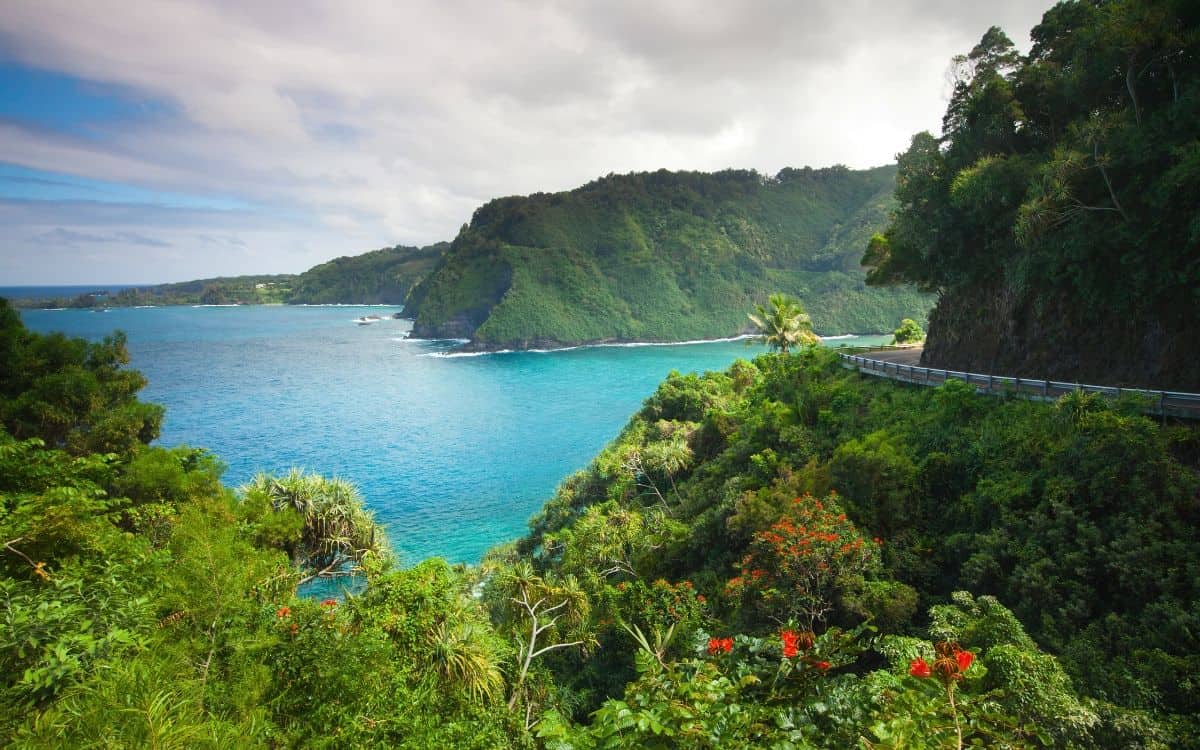
[00:04:14] Sara Kehaulani Goo: It’s in the town of Hana, so many people, I’m sure from your podcast are familiar with the road to Hana. A lot of people love to experience this very special road that, you know, winds its way along the cliffs of the east side. And our family land is really, most of it has been exactly the same since the days of the Hawaiian kingdom.
[00:04:36] Sara Kehaulani Goo: It’s wild, it’s tropical, it’s undeveloped, it’s off a dirt road. So just picture like really dense foliage and a really bright waves that crash on the rocky black lava coast. That’s really what the wild, you know, side of this east side of Maui looks like. And, and on that land was an ancient temple, a temple called Eheo.
[00:05:02] Sara Kehaulani Goo: And so I was intrigued, fascinated by knowing, you know, wanting to know more about the story behind why did I, my ancestor get this land, what is the meaning of the temple? So many, so many questions. It wasn’t until later I became a journalist that I was able to actually research and find answers because honestly, a lot of this story of Hawaiian people and its history doesn’t exist in a lot of books that most Americans have access to.
[00:05:31] Sara Kehaulani Goo: And so I spent probably about 10 years actually just trying to find those answers and realize that, you know, most Hawaii don’t know the story in history. Most people who visit Hawaii don’t know its real story and history of its people. And there’s a fascinating, deep story worth understanding because it relates to the culture and the importance of keeping that culture alive today.
[00:05:56] Bryan Murphy: You mentioned your family’s land, I think you said like goes all the way back to the Hawaiian kingdom, which is wild.
[00:06:04] Great Mahele Explained
[00:06:04] Bryan Murphy: So then what was the great Mahale of 1848 and what was it and why is it still such a big deal?
[00:06:11] Sara Kehaulani Goo: So the great Mahalei refers to a law, the most significant law probably of Hawaiian history.
[00:06:18] Sara Kehaulani Goo: And it was implemented by King Kamamea III at the time when Hawaii, of course, was its own independent nation, not part, not a territory of the United States. But for the first time, the king said that people could own land. And I know that sounds like not a novel concept from an American capitalist point of view, but in the days of the way the Hawaiians lived their lives, the native Hawaiians lived their lives for centuries was a real sense of community subsistence and reliance and self-sustainability using the natural resources they had.
[00:06:54] Sara Kehaulani Goo: And they certainly divided their communities into, you know, the natural geography of the island. But there was no, like a lot of indigenous cultures, it wasn’t that concept of I own this and this is mine and that’s yours. And so it really upended. There was a lot of pressure at the time in 1848 for the king to do this because there was growing interest in developing land for crop usage, particularly sugarcane.
[00:07:20] Sara Kehaulani Goo: But really what happened was even though the king set aside certain lands that were meant to be for the native Hawaiian people, tragically what happened within just like a decade of this law passing is that most native Hawaiians got like a percent, like a single percentage of all total land on the islands.
[00:07:41] Sara Kehaulani Goo: And this is because the native Hawaiian people had no concept of, you know, once you allow private ownership, suddenly there was a tax system. Suddenly there was a system you had to get your land surveyed and claim it and register it with the government. And this was all, these were all many steps that there were totally foreign concepts.
[00:08:00] Sara Kehaulani Goo: They’ve been farming the same land for centuries, that’s how they feed their family, that’s how they feed their neighbors, and they exchange goods. What they didn’t realize is that was all upended with the stroke of a pen. And it’s truly a miracle that my family, my ancestor, Kahanu, was granted a large portion of land by the king as part of this Mahele, and some other native Hawaiians were too, of course.
[00:08:24] Sara Kehaulani Goo: A lot of, a lot were, but a lot of them lo- lost it afterwards. But what’s amazing is that my family, my ancestor was able to keep any of that land, you know, 175 years later. It’s still in our family.
[00:08:37] Paper Trail Discovery
[00:08:37] Bryan Murphy: What was probably like the most surprising, you might have already alluded to it, but what, what was like the most surprising, surprising thing that you found personally for your family in your research?
[00:08:47] Sara Kehaulani Goo: Well, a couple things I would say. You know, I think it’s one thing we all have family stories, right, about ancestors or just family lore. And ours and ours was exciting and satisfying was finding out that that family lore turned out to be true. You know? So in our family, it was like grandma always said to me, she would take me to Hanamaui and say like, “Our land used to be, you know, it’s from the king, from the mountain to the sea.”
[00:09:11] Sara Kehaulani Goo: And she would kind of gesture from the sea all the way up to the Hala’akala volcano, which was kind of like mind blowing and honestly a little, I was a little skeptical. Yeah. Yes, even then.
[00:09:23] Bryan Murphy: Yeah.
[00:09:23] Sara Kehaulani Goo: But I always was like, “How do we get this? How did we get this land?” And what I was fascinated to learn was, you know, fast-forward years later, I’m going through an old box of documents that my Uncle Taki, my grandmother’s brother had kept.
[00:09:37] Sara Kehaulani Goo: And in it was a handwritten in Hawaiian from the King’s Ledger, the original grant in 1848 – That’s wild. In February 1848 with his name on it in Hana Maui. It literally says all those things. Of course, it’s in Hawaiian, so I have to get it translated. But it’s small. It’s just like, literally like as if someone drew like a line and wrote, you know, this land is for Kahanu.
[00:10:01] Sara Kehaulani Goo: And then underneath it was like, “This land is for someone else.” It didn’t have any acreage attached to it. It didn’t, it just said a place name. And so from there, I was able to actually follow what reporters love is the paper trail of, okay, what does that reward, that award look like in actual acreage? And then how do I track the sales, the leases, the history of these parcels of land over 175 years?
[00:10:27] Sara Kehaulani Goo: The amazing thing I found was that my grandmother’s 10 acres of land in Hanamaui was once 990 acres. And that for me became the story. Hmm. How does 990 acres become 10 acres? Well, I, it went to the Sugar Cane Foundation. Okay. Then it went to the Hana Ranch, and a lot of that Hana Ranch land became the hotel resort, which now you can stay at for $1,200 a night.
[00:10:52] Sara Kehaulani Goo: And you know what? That’s the story of Hawaii. That is what happened to our land, which is frankly the story of the Hawaiian people. And that’s the story that I though needed to be told. Today, more than 50% of native Hawaiians live outside of Hawaii, not often by choice because the rising cost of land is so expensive.
[00:11:11] Bryan Murphy: And so as you started digging into your family’s history, then what else, I’m curious, what else surprised you with that?
[00:11:19] Ancient Temple Secrets
[00:11:19] Sara Kehaulani Goo: There were so many. I mean, I went deep into the hayou. I mentioned this temple – Yeah. On our family’s property originally. This temple is still exists. It is the largest such temple in all of Polynesia.
[00:11:32] Sara Kehaulani Goo: It’s the size of a Costco. It’s enormous. And I couldn’t find a single book, a single anything that would tell me the history of this place. Like, for instance, how old is it? I had to find and research in PhD dissertations at UC Berkeley of anthropologists to understand, like, to find, like, a single document about it.
[00:11:54] Bryan Murphy: Wow.
[00:11:55] Sara Kehaulani Goo: And so, to me, it represented, like, how some people’s history just matters more than others in our world today, unfortunately. And it felt like an injustice, because clearly, you know, I was able to eventually find out the temple is centuries old. It was built in the 16th century. It was added onto over time.
[00:12:16] Sara Kehaulani Goo: Its use seemed to be for that of a halle or a house of the king or chief of that period of time. And it happens to be oriented so that as a perfect view of the, the island that Maui used to fight with, which is the big island. And so, you can imagine a time, a place where warring factions between islands were fighting each other, right?
[00:12:39] Sara Kehaulani Goo: Mm-hmm. That’s what this speaks to, and that’s the history. But the larger story for me was like, how did, why did none of this get written down? Why don’t we tell these stories? Why don’t we know this history? And that should be known, and I appreciate it, right? Today, you can go and visit this temple. There are lots of other temples for other similar purposes across the islands that are also a way to, like, look back into time, just like we do at many other places around the world, and have a deeper understanding of a place.
[00:13:07] Sara Kehaulani Goo: So that’s just one example.
[00:13:09] Culture Revival Today
[00:13:09] Bryan Murphy: What do you feel that current battle is today in light of all this?
[00:13:15] Sara Kehaulani Goo: Good question. I mean, I think that today, and I feel like, what is the future of Hawaii without its culture, without its people practicing their culture at the center of it, to share that? I mean, I think that there was a time, and I wanted to bring this up too, where, you know, Hawaiian culture was not celebrated, but it was, was discouraged.
[00:13:34] Sara Kehaulani Goo: You know, my grandmother, my great-grandmother, for example, her first language was Hawaiian or Olelo, Hawaii. But my grand – my grandmother, she also grew up in Hawaii, was forbidden from speaking that language. It was not allowed in schools. And so, I think no matter where you look today, you see that there’s a real fight to revive and practice the culture.
[00:13:54] Sara Kehaulani Goo: And that’s what makes Hawaii, again, so special. So, whether that’s hula, whether that’s the language, whether that’s our ancient historic places, whether it’s going back to our roots of our way of life and rebuilding fish ponds, right, to not rely so much on outside, you know, dependency for, for things like food or energy.
[00:14:15] Sara Kehaulani Goo: Those are things that both, that’s a conversation in Hawaii, and I feel like it’s also a conversation for those who visit to be aware of, right? Because if we love Hawaii, we also have to love the culture and, and, and care about how that’s carried on. And, and hopefully, if you’re lucky, you’re lucky, right, you, you have an experience when you’re there where you get to take part in it in some way.
[00:14:37] Sara Kehaulani Goo: And I think that’s what sets Hawaii apart as a, as a destination, as a special place on this earth.
[00:14:43] Bryan Murphy: Yes. Okay.
[00:14:44] Visiting With Context
[00:14:44] Bryan Murphy: So, for someone visiting in Hawaii today, you know, how does, and kind of tying back into the book a bit, how does knowing the history of old Hawaii change the way people see the islands today, the way they visit today?
[00:15:00] Sara Kehaulani Goo: In so many ways, right? I think it’s about, you know, not just picking up a few different Hawaiian phrases or words while you’re there, but I think it’s truly understanding that, you know, Hawaii’s values are rooted in something much deeper. I think it’s all about, you know, honoring the practices of our ancestors, you know, appreciating how they were able to live in such a beautiful, magical place, like, isolated from the rest of the world, and what kept that going for so long.
[00:15:33] Sara Kehaulani Goo: How they, you know, take care of the earth, like, the whole stewardship of the beautiful environment around them is something that when you move through the islands, you appreciate, but may not understand the context of, you know, how special, how, how, for example, like, one example, how there’s just flowers that grow in Hawaii are endemic and don’t grow anywhere else in the world.
[00:15:55] Sara Kehaulani Goo: You know, how do we appreciate and care for that as we move through the islands or the animals that you’re going to see in the ocean or on the shoreline or on the mountains? So, you know, each of those things makes it a unique place, but I think it’s even better when you understand the context of it, that, oh, did you know that this special bird, you know, its feathers were used to make feather cloaks for our Ali’i and our kings?
[00:16:21] Sara Kehaulani Goo: And, you know, it’s this bright orange and bright yellow and, you know, this is part of our history and what, why, why that is. I think whenever we travel through the world, at least for me, it’s so much better when I understand the history and the complexity of a place and its people and its cultural traditions.
[00:16:39] Sara Kehaulani Goo: And so, just because it’s a beautiful beach destination too, doesn’t mean that we should think of it any differently.
[00:16:45] Bryan Murphy: Mm-hmm.
[00:16:46] Reading Kuliana Benefits
[00:16:46] Bryan Murphy: For someone getting ready to visit Hawaii, like they’re finally doing it, they’re going, how would reading your book help experience the islands a bit differently or from a, I guess like a different lens?
[00:17:00] Sara Kehaulani Goo: Yeah, a couple reasons. And I’ve heard from so many readers already who’ve shared this with me. One is they just feel like they understand Hawaii in a deeper way. It really gets beyond the tour books and provides a perspective from a native Hawaiian family living on the islands, understanding with the kind of how the fragility of the culture is so important to appreciate.
[00:17:24] Sara Kehaulani Goo: And it helps them understand how to navigate and move through the islands in a way that is just smarter and is also more respectful and knowing that they’re welcome there, but also what kind of tourist is really especially welcome in Hawaii. You know, I think that Hawaii is one place where it can suffer from over tourism.
[00:17:44] Sara Kehaulani Goo: And I think that it’s not just about numbers, but it’s also about the kind of, of expectations people have from that experience. So it’s not just like I’m here to take, but also I’m here to receive, right? And I’m here to learn and I, and I wanna appreciate my experience and it will help me have a better one.
[00:18:03] Sara Kehaulani Goo: Maybe you might think of some things to add to your things to do or want to do or want to see as a result, you know, around the history of its people, whether that’s Iulani Palace in Honolulu, or whether that’s the Kahanu Garden in Hanumaui.
[00:18:20] Bryan Murphy: That’s awesome. I mean, anything else that you would want someone to not –
[00:18:26] Authentic Hula Matters
[00:18:26] Sara Kehaulani Goo: I guess one other thing we didn’t talk about is hula.
[00:18:28] Sara Kehaulani Goo: And hula is, of course, iconic and what most people think of when they think about Hawaii and that special experience. It is a little bit of a stereotype, but I think what’s exciting is that now there’s an effort to do more authentic hula and have that kind of experience for visitors. And what do I mean by that?
[00:18:50] Sara Kehaulani Goo: Well, hula is not just a performance, it’s not a show. If you’re, you know, hula is actually the storytelling of our, of our people, beautiful places, and stories passed down. You know, Hawaiian, like a lot of indigenous languages, was not a written language until the 1820s or so. So the way that we would pass down stories is through olelo, storytelling and memorization or through dance.
[00:19:17] Sara Kehaulani Goo: And so that’s really at a c – its core what hula is. Having that authentic experience has been something that has been used more visible if you seek it out. It’s not, you know, mixed in all the time with like Tahitian and Samoan and other Pacific, South, South Pacific dancing, which is also great to experience.
[00:19:38] Sara Kehaulani Goo: But when you’re in Hawaii, I think you would wanna see the real thing, experience the real thing. And now you can do that at a few different places that I’m excited to see on Oahu, on, on Maui. And every island has some version of it, but do a little research and try to find out how you can experience that because it truly is amazing.
[00:19:57] Sara Kehaulani Goo: And, and if you’d go the right place, they’ll, they’ll do a little interpretation and explain a little bit more what it all means and what the stories are that you’re seeing actually mean.
[00:20:06] Where to Get the Book
[00:20:06] Bryan Murphy: Sarah, where can people find the book, get the book?
[00:20:09] Sara Kehaulani Goo: Yeah, anywhere books are sold. It’s on Amazon, it’s on Bookshop with independent bookstores.
[00:20:14] Sara Kehaulani Goo: It’s in Barnes and Noble. So it’s in, should be in your local library. It should be on Libby. So anywhere you, you know, hang out with your books and love to buy books. I also did the audio for the audiobook myself to tell the story if you wanna listen more to me or just would rather read. There’s a few different options there for you.
[00:20:33] Bryan Murphy: That’s awesome.
[00:20:35] Final Takeaways
[00:20:35] Bryan Murphy: Man, I really appreciated that conversation with Sarah. And going back to that question we started with, how does 990 acres become just 10? I think Sarah did a great job explaining that. There’s a whole lot of history behind that question. It’s not just her family story. It’s part of a bigger story about Hawaii and its people.
[00:20:54] Bryan Murphy: And I think what stood out in this whole conversation and this idea of Kuliana is that, you know, this responsibility to care for something and pass it along to the next generation. And you don’t have to just be Hawaiian to do that. Now, obviously, our role as visitors is different, but I do think there’s something that we can all learn from this conversation.
[00:21:16] Bryan Murphy: Even what Sarah said about Hula, it’s easy to watch a performance, you know, enjoy it and move on to the next thing. But there’s a story being told there, and when you understand just a little bit of that history and that story, I think you appreciate the place you’re visiting so much more. Really, that’s what being a responsible visitor to Hawaii, well, anywhere that you travel to, just having a little bit of context to where you’re traveling to definitely matters.
[00:21:47] Bryan Murphy: And really, that’s a big part of why I love having these types of conversations on Hawaii’s Best. So if you wanna learn more about Sarah’s story, I’ll link her book below Kuliana in the show notes below. And if you enjoy this conversation, there’s plenty more coming your way, so go ahead and make sure you hit follow if you’re listening on Apple Podcasts or on Spotify so you get the next episode coming up this coming Tuesday.
[00:22:13] Bryan Murphy: All right, so until then, as always, live with Aloha.
RELATED PODCASTS

Ep. 175: 3 First Day in Hawaii Mistakes to Avoid
Grab the First-Day in Hawaii Checklist Did you know simple first-day mistakes in Hawaii can derail your whole trip before day two even starts? For a...
Ep. 174: HawaiianMiles Are Ending: What Hawaii Travelers Lose With Atmos Rewards
Hawaiian Airlines just announced a massive change that impacts almost every Hawaii traveler. HawaiianMiles are ending on October 1, 2025, and they...

Ep. 173: Listener Q&A: Your TOP Hawaii Travel Questions Answered
Planning a Hawaii vacation can be exciting, but it also brings up a lot of questions. From figuring out how much it costs to take your family, to...
Bryan Murphy is the creator of Hawaii's Best Travel and host of the Hawaii's Best podcast, a top-30 U.S. travel podcast with 700,000+ downloads and a 4.9-star rating from 280+ reviews on Apple Podcasts. A Certified Hawaii Destination Expert and member of the Hawaii Visitors & Convention Bureau, he helps visitors plan more meaningful trips to Hawaii with practical, respectful guidance. His work has been featured in Travel + Leisure, National Geographic, Yahoo!, Simple Flying, USA Today, Parents, and Fox.