

What Is King Kamehameha Day? What Hawaii Visitors Should Know
Before you scroll, I sometimes share links for Hawaii spots I genuinely recommend. No extra cost to you, it just supports the site. Read our affiliate disclosure for info.
TL;DR: King Kamehameha Day Overview
King Kamehameha Day is a Hawaii state holiday on June 11 that honors the king who unified the Hawaiian Islands, with parades and events happening across multiple islands throughout June.
- Celebrations take place on Oahu, the Big Island, Kauai, Molokai, and Maui, each on different dates
- The main Honolulu floral parade is Saturday, June 13, 2026, running from near Iolani Palace to Kapiolani Park
- Road closures in downtown Honolulu and Waikiki begin around 7:30 a.m. on parade day
- The lei draping ceremony at the Kamehameha statue is Friday, June 12, from 2:30 to 5:00 p.m.
- The holiday is rooted in Hawaiian culture and history, not just a visitor event
King Kamehameha Day is one of Hawaii’s most important holidays.
If you’re visiting in June, it’s worth knowing what it is before you arrive. I cover Hawaii travel full time, and this is one of the questions I hear quite a bit from travelers.
They see the parades and road closures but aren’t sure what’s behind them.
King Kamehameha Day honors the Hawaiian king who unified the islands. In 2026, celebrations happen across multiple islands over several weekends.
By the end of this article, you’ll know what to expect, when events happen, and how to plan around it.
Don’t feel like reading? Listen to my episode of King Kamehameha Day
Who Was Kamehameha the Great, and Why Does Hawaii Still Honor Him?
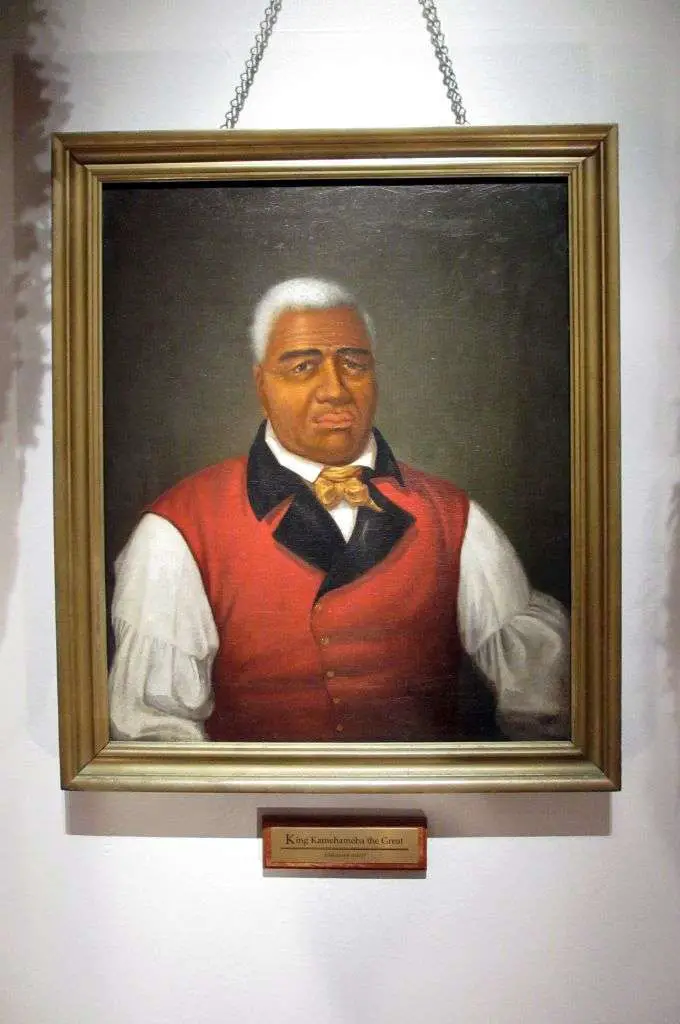
King Kamehameha I, often called Kamehameha the Great or the “Napoleon of the Pacific,” was born in North Kohala on the island of Hawaiʻi.
From those rugged northern slopes, he grew into the leader who unified the Hawaiian Islands under a single rule, establishing the Kingdom of Hawaiʻi in the early 1800s.
Why he matters:
- Before Kamehameha, each island was governed by competing chiefs
- Through military strategy, diplomacy, and leadership, he united the islands under one rule
- He established a recognized Hawaiian kingdom that engaged with foreign powers on its own terms
- His legacy shaped Hawaiian identity in ways that are still visible and alive today
King Kamehameha I, often called Kamehameha the Great or the “Napoleon of the Pacific,” was born in North Kohala on the island of Hawaiʻi.
From those rugged northern slopes, he grew into the leader who unified the Hawaiian Islands under a single rule, establishing the Kingdom of Hawaiʻi in the early 1800s.
Why he matters:
- Before Kamehameha, each island was governed by competing chiefs
- Through military strategy, diplomacy, and leadership, he united the islands under one rule
- He established a recognized Hawaiian kingdom that engaged with foreign powers on its own terms
- His legacy shaped Hawaiian identity in ways that are still visible and alive today
For visitors, knowing this context matters.
When you see lei draped over the Kamehameha statue, or watch hālau hula perform in his honor, you are seeing a living thread connecting present-day Hawaii to that founding moment.
The celebration is not nostalgia. It is an ongoing acknowledgment of who the Hawaiian people are and where they come from.
When Did King Kamehameha Day Begin? The History Behind the Holiday
|
Year |
What Happened |
|
1871 |
King Kamehameha V proclaimed a day to honor his grandfather |
|
1872 |
The first Kamehameha Day celebration was held on June 11 |
|
Today |
June 11 remains the official state holiday observed across all of Hawaiʻi |
The first Kamehameha Day holiday ever officially observed holds the distinction of being one of the oldest holidays in Hawaiian history. What makes that origin notable is the intentionality behind it. Kamehameha V was asserting something important: that Hawaiian history, Hawaiian leaders, and Hawaiian culture deserved formal recognition. In an era when foreign influence over the islands was growing rapidly, that act carried real political and cultural weight.
What to know about the holiday today:
- June 11 is the official public holiday date
- Government offices may close or have adjusted hours
- Celebrations span multiple weekends and islands, stretching from early June into late June
- Each island marks the day differently, with its own schedule of events
What Happens at the King Kamehameha Celebration Floral Parade on Oʻahu?
The King Kamehameha Celebration Floral Parade on Oʻahu is the most widely seen event in the entire celebration. In 2026, it marks the 109th King Kamehameha Celebration Floral parade in Hawaiian history.
2026 Oʻahu Parade at a Glance:
|
Detail |
Info |
|
Date |
Saturday, June 13, 2026 |
|
Time |
9:00 a.m. to 1:00 p.m. |
|
Start |
Near ʻIolani Palace |
|
Route |
Punchbowl Street → Ala Moana Boulevard → Kalakaua Avenue |
|
End |
Queen Kapiʻolani Park |
|
Road closures begin |
Approximately 7:30 a.m. |
What you’ll see along the route:
- Flower-covered floats made from thousands of fresh blooms
- The Royal Hawaiian Band and local marching bands
- Cultural groups and royal societies in traditional attire
- Pāʻū riders on horseback representing each island
- Hālau hula and community organizations
The King Kamehameha Day celebration parade is not a performance put on for tourists. It is a community event that locals plan for with deep pride.
Arrive early, be patient with crowds, and give yourself a full morning.
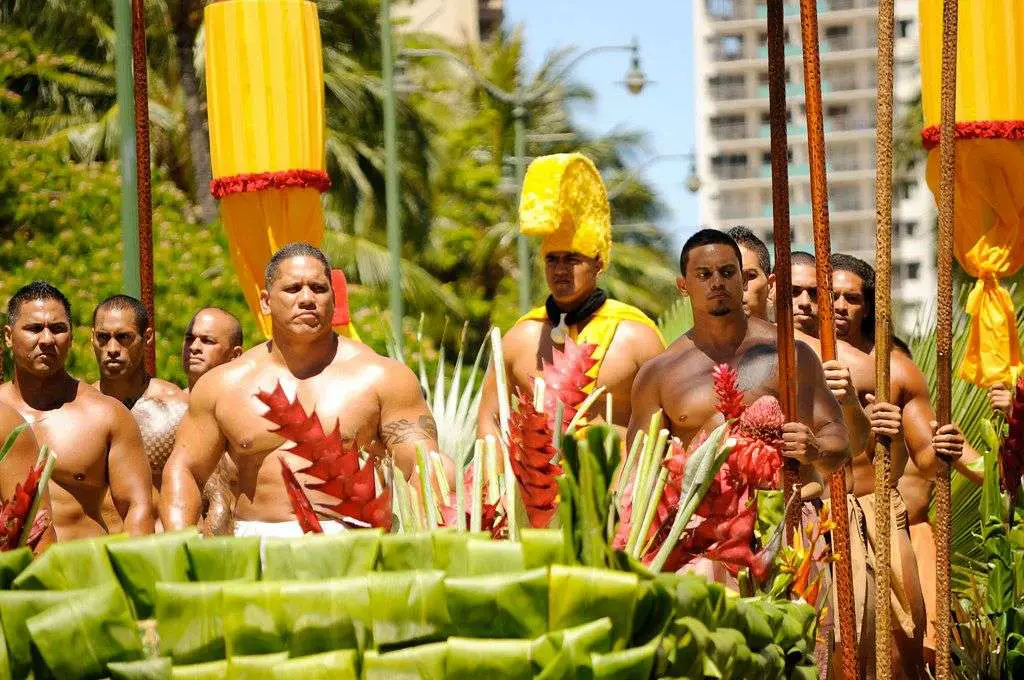
“2012 King Kamehameha Parade” by jdnx is licensed under CC BY 2.0.
What Is the Lei Draping Ceremony, and Why Does It Matter?
The lei draping ceremony is one of the most quietly powerful moments of the entire celebration.
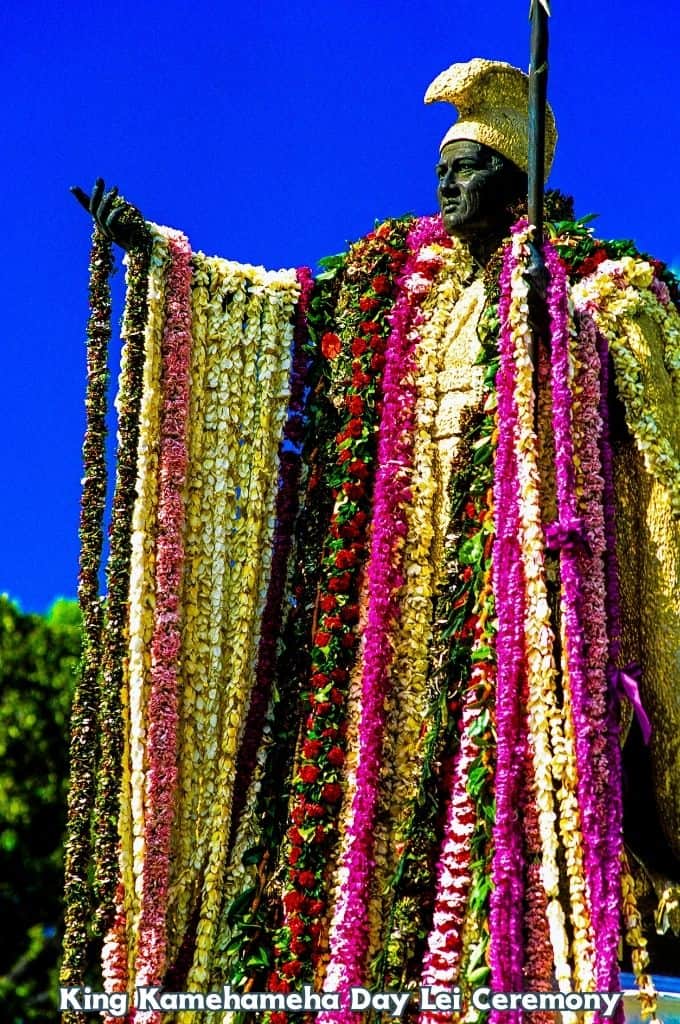
2026 Lei Draping Schedule on Oʻahu:
|
Event |
Date |
Time |
Location |
|
King Kamehameha I Tribute |
Thursday, June 11 |
9:00–9:30 a.m. |
Kamehameha statue, Aliiolani Hale |
|
Lei Draping Ceremony |
Friday, June 12 |
2:30–5:00 p.m. |
Kamehameha statue, Aliiolani Hale |
In Hawaiian tradition, lei are not decorative accessories. They carry meaning. Draping lei over the statue of King Kamehameha is an act of aloha, respect, and remembrance directed toward an ancestor.
A note on the statues:
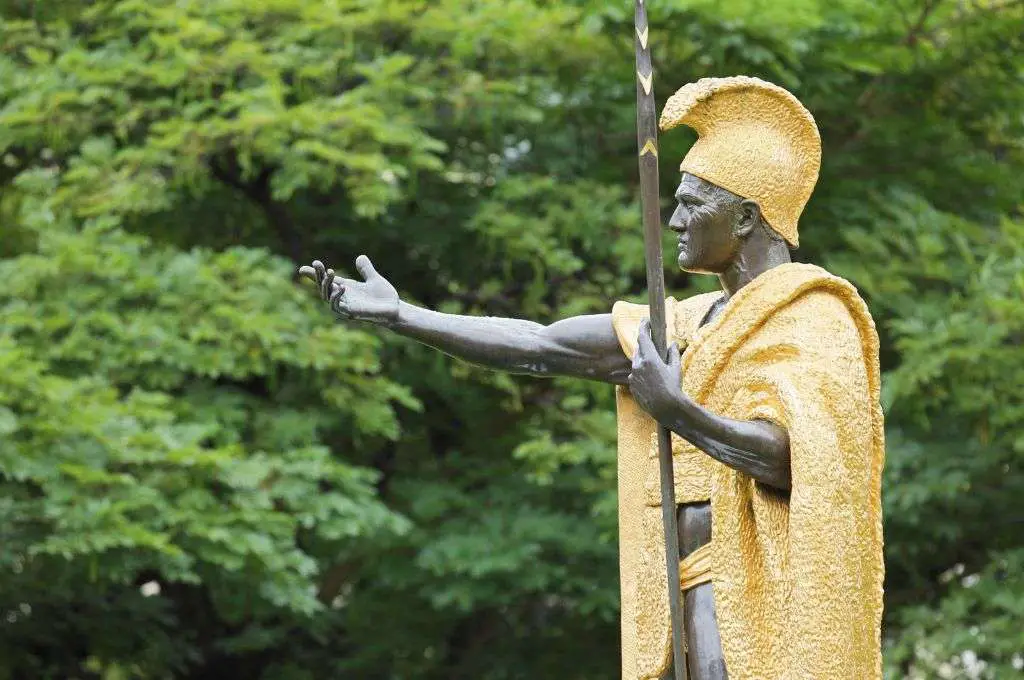
- The Kamehameha statue in Honolulu, near ʻIolani Palace, is actually a replica
- The original statue stands in Kapaʻau, North Kohala, near the birthplace of King Kamehameha
- A second replica stands in Washington D.C. in the National Statuary Hall, representing Hawaiʻi
Watching the lei draping gives visitors one of the clearest windows into what this holiday is really about.
You are not watching a performance. You are witnessing a community in conversation with its history.
How Do King Kamehameha Day Events Differ Across the Hawaiian Islands?
Each island puts its own signature on the celebration. Here’s the full 2026 schedule:
|
Island |
Event |
Date |
Location |
|
Oʻahu |
Floral Parade + Hoʻolauleʻa |
June 13 |
Downtown Honolulu → Kapiʻolani Park |
|
Big Island (Kona) |
Parade + Hoʻolauleʻa |
June 6 |
Kailua-Kona |
|
Big Island (Kohala) |
Lei Draping + Parade + Hoʻolauleʻa |
June 11 |
Kamehameha Park |
|
Kauai |
Floral Parade + Hoʻolauleʻa |
June 13 |
Vidinha Stadium → Historic County Building, Lihue |
|
Molokai |
Hoʻolauleʻa |
June 6 |
Molokai Community Health Center, Kaunakakai |
|
Maui |
Pau Parade + Hoʻolauleʻa |
June 20 |
Baldwin High School → Queen Kaahumanu Center, Kahului |
The Big Island deserves special mention.
Kohala is where Kamehameha was born, and communities there observe the holiday with particular depth.
The town of Hawi, close to the birthplace of King Kamehameha, sits at the heart of this legacy in a way no other place can quite match.
If you’re traveling to the island of Hawaiʻi during this time, these events offer a meaningful way to understand the place you’re visiting.
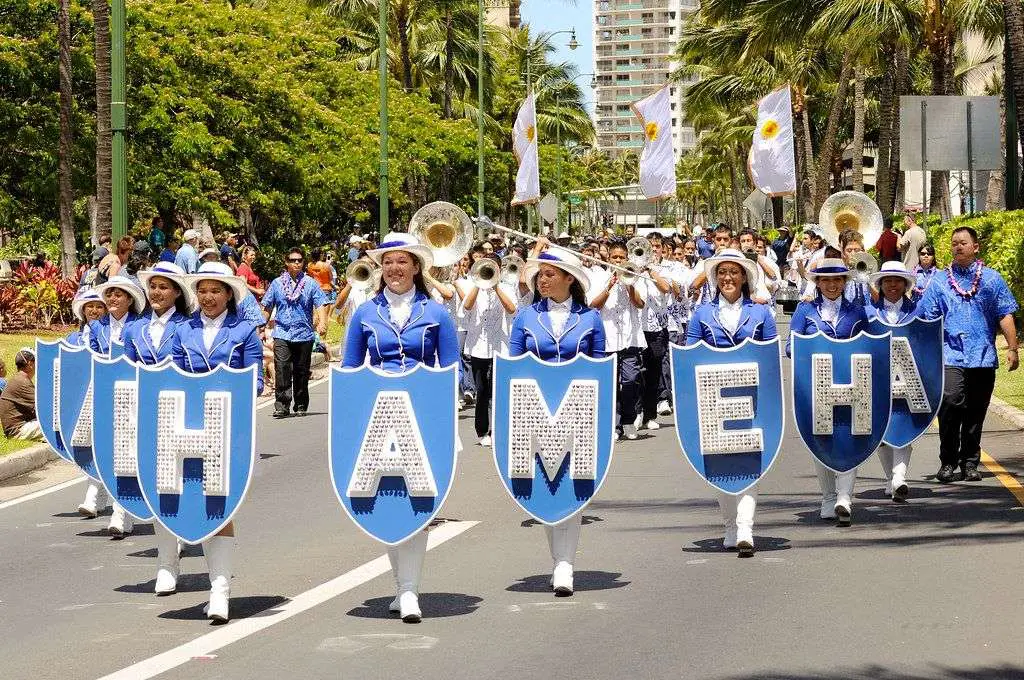
“2012 King Kamehameha Parade” by jdnx is licensed under CC BY 2.0.
Who Are the Pāʻū Riders, and What Do They Represent?
The pāʻū riders on horseback are often among the most memorable things visitors see at the Honolulu floral parade. Here’s what’s behind the tradition:
The basics:
- Pāʻū riders represent each of the Hawaiian Islands through specific colors and flowers
- The tradition connects to Hawaiian horsemanship culture, which developed after horses arrived in the early 1800s
- Hawaiian women riders became known for their skill and distinctive style
- The pāʻū costume, a long wrapped skirt worn while riding, became part of that identity
Island colors represented in the parade:
|
Island |
Color |
Flower |
|
Hawaiʻi |
Red |
Lehua (ʻŌhiʻa) |
|
Maui |
Pink |
Lokelani (Rose) |
|
Oʻahu |
Yellow |
Ilima |
|
Kauai |
Purple |
Mokihana |
|
Molokai |
Green |
White Kukui Blossom |
|
Lanai |
Orange |
Kauna’oa |
|
Niihau |
White |
White Pupu Shell Lei |
|
Kahoolawe |
Gray/Silver |
Hinahina |
Watching the riders process through downtown Honolulu is a moment worth slowing down for. The detail in the costumes, the flowers selected for each island, and the horsemanship on display all carry meaning that runs deeper than pageantry.
Will King Kamehameha Day Affect Your Travel Plans in 2026?
If you’re staying in Waikiki, Ala Moana, or Downtown Honolulu on June 13:
- Road closures along the parade route begin around 7:30 a.m.
- The parade runs from 9:00 a.m. to 1:00 p.m., with roads potentially closed longer
- Driving across that part of the city will be slow or impossible during parade hours
Add extra time if you have any of these on June 13 morning:
- Airport transfers
- Rental car pickups near downtown
- Morning tours departing from Waikiki or Ala Moana
- Restaurant reservations near the parade route
If you’re staying elsewhere on Oʻahu or on a neighbor island:
- The impact on your logistics is likely minimal
- Check the King Kamehameha Celebration Commission’s official page closer to your travel date for updated closures
Exploring the Four King Kamehameha Statues
If you’re visiting Hawaii on King Kamehameha Day, explore the four statues of the great king across the islands. Here’s where you can find them:
- The most famous statue of King Kamehameha is located in front of Aliʻiolani Hale and ʻIolani Palace on King Street in downtown Honolulu.
- Another well-known statue stands in Emancipation Hall at the Capitol Visitor Center in Washington, D.C.
- On the island of Hawaii, you can find a statue in Kapaʻau town near his birthplace.
- The Grand Wailea Resort Hotel & Spa Maui, you can visit a statue of King Kamehameha.
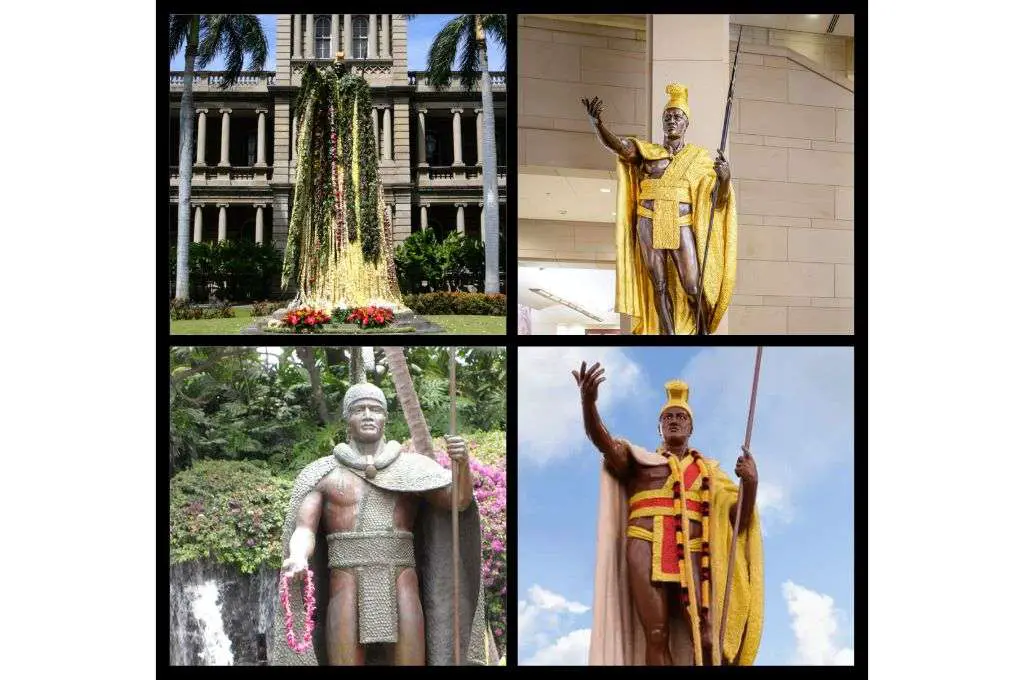
Each of these statues varies in size and material used for construction, but they all pay tribute to the unification of the Hawaiian Islands by King Kamehameha I.
Visiting these sites offers an opportunity to learn more about his legacy and Hawaii’s rich history and cultural heritage.
How Can Visitors Attend Respectfully?
King Kamehameha Day is a public celebration and visitors are genuinely welcome. Being welcome, though, is different from being the intended audience. This holiday belongs to the Hawaiian community first.
Do:
- Arrive early to find a good viewing spot before crowds build
- Clear sidewalks and parade areas so local families have space
- Support local food vendors, artists, and small businesses at hoʻolauleʻa events
- Slow down and pay attention to the meaning behind what you’re seeing
- Ask questions with genuine curiosity and respect
Don’t:
- Block driveways or viewing areas to get a photo
- Treat hula performances or cultural protocol as entertainment made for tourists
- Rush through the event without taking time to understand what you’re witnessing
- Assume everything is explained by what it looks like on the surface
The hoʻolauleʻa events following parades are great places for visitors to engage more actively.
Think of these community festivals as an opportunity to learn something real about Hawaiʻi, not just the version packaged for tourism.
What Is the 2026 Theme, and What Does It Tell Us?
2026 Official Theme: “E ku, e hoololi” Translation: Stand upright and change unpleasant conditions
This theme is rooted in the kind of purposeful action that defined Kamehameha’s own life. To the King Kamehameha Celebration Commission, the annual theme is not incidental. It shapes the spirit of ceremonies, hula performances, and community gatherings across all islands.
For visitors, the theme offers a lens:
- This is not a celebration frozen in the past
- It is an expression of living Hawaiian values applied to the present
- The legacy of King Kamehameha is a framework for Hawaiian identity and future-building, not just historical memory
- Knowing the theme helps you understand the speeches, hula, and ceremony with more than surface-level appreciation
Whether you’re watching from a Waikiki hotel balcony or standing near Kamehameha Park in Kohala, you’re in the presence of something that matters deeply to the people of Hawaiʻi.
Take that seriously, and the experience will stay with you long after you leave the islands.
Video by Hawaii John
King Kamehameha Day’s Impact on Modern Hawaii
King Kamehameha Day has significantly impacted modern Hawaii, influencing its tourism industry and preserving its cultural heritage.
– The holiday draws thousands of visitors each year who come to witness the colorful parades, traditional ceremonies, and cultural performances.
– It also serves as an opportunity to educate the younger generation about Hawaiian history and traditions.
– Through events organized by community groups and the State Foundation on Culture and the Arts, King Kamehameha Day continues to enrich Hawaii’s vibrant culture and identity.
Influence on Hawaiian Tourism
King Kamehameha Day is a significant cultural event and a vital source of revenue for the local businesses and tourism industry in Hawaii.
The festivities draw visitors from all over the world interested in learning about Hawaiian history and traditions.
One example is how the King Kamehameha Celebration Commission works with various organizations to coordinate events that attract tourists while promoting cultural exchange and diversity.
These include art exhibitions featuring local artists at the Hawai’i State Art Museum as part of its “Art in Public Places” program. There are also Hawaiian music concerts showcasing emerging talents such as those organized by Kapahulu Music Club at Waikīkī, or prominent musicians like those performing in Royal Hawaiian Band concerts held across different venues throughout O’ahu during the celebration week.
Preservation of Cultural Heritage
As a traveler to Hawaii, one of the most important aspects of King Kamehameha Day is its emphasis on preserving the cultural heritage of Hawaii. This holiday celebrates the legacy of King Kamehameha I and his role in unifying the islands into a single kingdom.
Without this unification, Hawaiian culture might have been lost or diluted.
Today, organizations like the Kamehameha Schools are working tirelessly to preserve Hawaiian culture through education and support services. The schools provide resources that help young people learn about their heritage while also providing community-based programs that promote traditional practices such as hula dancing and lei-making.
Additionally, attending events like the floral parade or lei-drapping ceremony during King Kamehameha Day highlights just how important cultural preservation is to modern-day Hawaiians.
Closing Thoughts About King Kamehameha Day
King Kamehameha Day is a beloved holiday in Hawaii that celebrates the history and traditions of the Hawaiian Islands. From the floral parades to the draping ceremony, this day is full of rich cultural significance that honors one of Hawaii’s most important figures, King Kamehameha I.
Visiting Hawaii on June 11th offers an opportunity to experience these incredible festivities firsthand and learn more about Hawaiian culture.
FAQs about King Kamehameha Day
1. Who was King Kamehameha and why is he celebrated in Hawaii on his own holiday?
King Kamehameha was a Hawaiian monarch who successfully united the islands under one rule, creating the Kingdom of Hawaii. He is celebrated on June 11th each year to honor his leadership abilities and contributions to the Hawaiian people.
2. What are some traditional activities and events that take place during King Kamehameha Day celebrations?
King Kamehameha Day celebrations often include parades featuring colorful floats, marching bands, hula dancers, and other performers representing different aspects of Hawaiian culture.
There are also cultural demonstrations such as canoe races, native food tasting booths, lei-making contests or craft fairs celebrating traditional arts like carving wooden sculptures or weaving textiles using natural materials.
3. How do Hawaiians mark this special day in their personal lives?
Many Hawaiians will adorn their homes with banners or flags bearing King Kamehameha’s image (similar to how Americans display flags for Independence Day). In contrast, others may schedule gatherings with family and friends, enjoying outdoor BBQs or picnics at local parks where entertainment can be found nearby.
4. Are there any particular customs that non-Hawaiian visitors should know about when attending a King Kamehameha Day celebration?
Visitors should wear respectful clothing not too revealing but typical beach attire works fine.They can get involved by learning about various aspects of Hawaiian culture including rhythm dancing classes or sunset yoga sessions held around town near festival events!
Visitors can also learn about significance behind many symbols & traditions which are embedded within every aspect of these festivities to truly engage themselves with rich history of Hawaii’s past .
Bryan Murphy is the creator of Hawaii's Best Travel and host of the Hawaii's Best podcast, a top-30 U.S. travel podcast with 700,000+ downloads and a 4.9-star rating from 280+ reviews on Apple Podcasts. A Certified Hawaii Destination Expert and member of the Hawaii Visitors & Convention Bureau, he helps visitors plan more meaningful trips to Hawaii with practical, respectful guidance. His work has been featured in Travel + Leisure, National Geographic, Yahoo!, Simple Flying, USA Today, Parents, and Fox.