Lei Day in Hawaii: What It Is and Why It Matters

Every year on May 1, Hawaii celebrates Lei Day, a beloved cultural observance honoring the lei and the spirit of aloha.
Free festivals, hula performances, lei-making contests, and live music take place across the main inhabited islands.
In 2026, Oahu’s flagship event marks the 98th Annual Lei Day Celebration at Kapiʻolani Park, bringing this cherished tradition nearly to its centennial.
If you are visiting Hawaii in early May, Lei Day is worth planning around.
Most events are free, family-friendly, and open to everyone. Lei Day is not a state holiday, so most businesses and services operate normally.
It is simply a beautiful day to be in the islands.
Lei Day Podcast Episode
Learn from our “un-official” Cultural Practitioner, Kumu Kahanuola Solatorio what Lei Day in Hawaii is.
What Is the Significance of Lei Day in Hawaii?
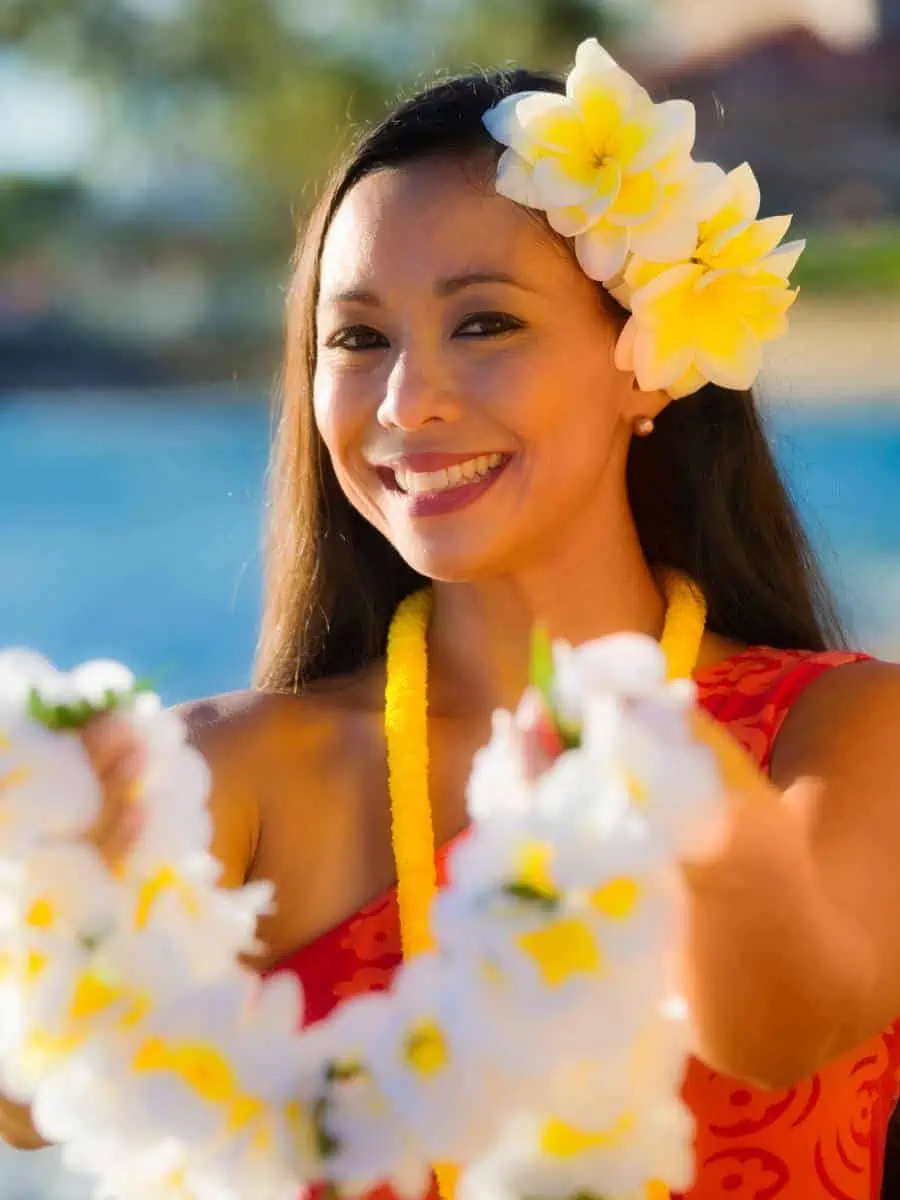
The lei is far more than a garland of flowers.
In Hawaiian culture, a lei represents the unspoken expression of aloha, which can mean love, respect, welcome, farewell, joy, and even grief.
The word aloha itself has no single translation, and neither does a lei.
The tradition of lei-making stretches back to Polynesian voyagers who carried it to the islands from Tahiti, long before any written record exists, according to the Lei Day organization.
Lei Day grew from a simple but powerful idea. In late 1927, poet Don Blanding, known as the “Poet Laureate of Hawaiʻi,” began developing the concept that the islands deserved a holiday entirely their own.
He formally proposed it in a February 1928 column in the Honolulu Star-Bulletin, and it caught hold immediately.
His colleague, columnist Grace Tower Warren, suggested holding it on May 1 and coined the phrase that still echoes across the islands today: “May Day is Lei Day in Hawaiʻi.”
The first celebration was held in 1928. In 1929, Governor Wallace R. Farrington officially proclaimed May 1 as Lei Day, and the tradition has continued every year since.
As the City and County of Honolulu notes, Lei Day is not a state holiday, but it is one of the most joyfully observed cultural celebrations in the islands.
Each island in the Hawaiian chain also has its own official color, symbolic lei or material, and flower, making the celebration uniquely personal to wherever you are standing. Here is a quick look:
| Island | Symbolic Lei or Material | Flower | Color |
|---|---|---|---|
| Oʻahu | ʻIlima | ʻIlima | Yellow |
| Maui | Lokelani | Pink Rose | Pink |
| Hawaiʻi (Big Island) | Lehua | ʻŌhiʻa Lehua | Red |
| Kauaʻi | Mokihana | Mokihana Berry | Purple |
| Molokaʻi | Kukui | Kukui Blossom | Green |
| Lānaʻi | Kaunaʻoa | Kaunaʻoa Vine | Orange |
| Kahoʻolawe | Hinahina | Hinahina | Gray |
| Niʻihau | Pūpū Shell Lei* | — | White |
Niʻihau’s symbolic lei is crafted from pūpū shells, the island’s most treasured natural material, rather than a plant or flower.
Is It May Day or Lei Day in Hawaii?
Both, actually.
May 1 is recognized around the world as International Workers’ Day, or May Day.
In Hawaii, that same date was intentionally chosen to give the islands something uniquely their own, a joyful counterpoint rooted in nature, aloha, and local identity.
Grace Tower Warren’s phrase, “May Day is Lei Day,” was both a play on words and a cultural declaration.
So while much of the world marks May Day as a labor holiday, in Hawaiʻi it is a celebration of the lei, community, and the aloha spirit.
How Do You Say Happy Lei Day in Hawaiian?
The most common greeting is “Hauʻoli Lā Lei”, pronounced “how-OH-lee lah lay.”
It translates roughly to “Happy Lei Day.” Hauʻoli means happy or joyful, lā means day, and lei is, of course, the lei.
You can also simply say “Aloha Lei Day” and you will be warmly understood.
If you would like to learn more essential Hawaiian words before your trip, check out our guide to Hawaiian words and phrases for your vacation.
2026 Lei Day Celebrations Across the Islands
Lei Day events in 2026 are happening across the main inhabited islands. Most are free to attend, though a small number of special add-on events require tickets, as noted below.
On Oahu, the flagship event is the 98th Annual Lei Day Celebration at Kapiʻolani Park, hosted by the City and County of Honolulu Department of Parks and Recreation.
On Friday, May 1 from 9 a.m. to 5 p.m., you will find a lei-making contest, hula hālau performances, including Hawaiian steel guitar and other live music, craft vendors, and the chance to make your own lei while supplies last.
The lei contest exhibit opens to the public from 1 to 4:45 p.m. and it is genuinely stunning. This event is free.
Also on Oahu, Grammy Award-winning artist Kalani Peʻa performs at the Kaimana Beach Hotel’s Muʻu & Mimosas tea party on May 2.
Tickets are required, so check the hotel’s website closer to the date for current pricing and availability, as details can shift.
For a feel of the celebration, watch this video from KHON2:
On Maui, the Lei Day Heritage Festival at Hale Hōʻikeʻike at the Bailey House Museum in Wailuku runs May 1 from 10 a.m. to 4 p.m. with interactive exhibits, lei-making workshops, and contests.
That same evening, Wailuku First Friday on May 1 from 6 to 9 p.m. on Market Street becomes a free lei-themed street festival with live music, local vendors, and free lei-making at the Wailuku Garage.
Note that Market Street closes to vehicles at 5:30 p.m., per Maui Now.
On the Big Island, the 21st Hilo Lei Day Festival kicks off at Kalākaua Park on May 1 from 10 a.m. to 2 p.m. with live music, kahiko and ʻauana hula, and hands-on lei-making demonstrations.
On Saturday, May 2, the Waikōloa Lei Day Festival at Kings’ Shops and Queens’ Marketplace runs from 2 to 7 p.m. with cultural performances, a lei contest, and a local artisan marketplace. Both are free, per Big Island Now.
On Kauai, the Kauai Museum hosts its annual Lei Day celebration on May 1 from 10 a.m. to 1 p.m., inviting the community to make a lei, wear a lei, and give a lei, which is the simple but beautiful spirit of the whole holiday.
What This Means for Your Hawaii Trip
Lei Day is not a state holiday, so nothing shuts down.
Stores, restaurants, beaches, parks, and transportation all operate normally.
Lei Day typically does not disrupt flights, hotels, or roads.
What it does offer is one of the most authentic cultural experiences available to any visitor in Hawaii, at no cost.
If you are visiting Hawaii around May 1, you do not need to change a single plan. Just show up.
Most events are held in parks, open-air plazas, and public spaces that welcome walk-in visitors.
Do You Need to Book Anything in Advance?
For the main free events, including Kapiʻolani Park on Oahu, Kalākaua Park in Hilo, Wailuku First Friday on Maui, and the Kauaʻi Museum, no reservations are needed.
Just arrive, explore, and enjoy.
The only ticketed Lei Day event highlighted in 2026 is the Kaimana Beach Hotel’s Muʻu & Mimosas on May 2, featuring Kalani Peʻa. Check the hotel’s website for current pricing.
Everything else is free and walk-up.
Should Visitors Wear a Lei?
Yes, and please do.
Lei Day is one of the few times when wearing a lei feels completely natural and communal, because nearly everyone around you is doing the same thing.
You can buy a fresh lei at the event from local vendors, try making one yourself at a free workshop, or give one to a friend.
The tradition is genuinely inclusive and open to all.
How to Celebrate Lei Day Respectfully
The lei comes with a few unspoken customs worth knowing. When someone gives you a lei, wear it.
Removing it in front of the giver is considered disrespectful.
It is traditionally draped over your shoulders, not held in your hand or stuffed in a bag. A lei is a personal gift, so treat it with care.
You do not have to be an experienced lei-maker to participate.
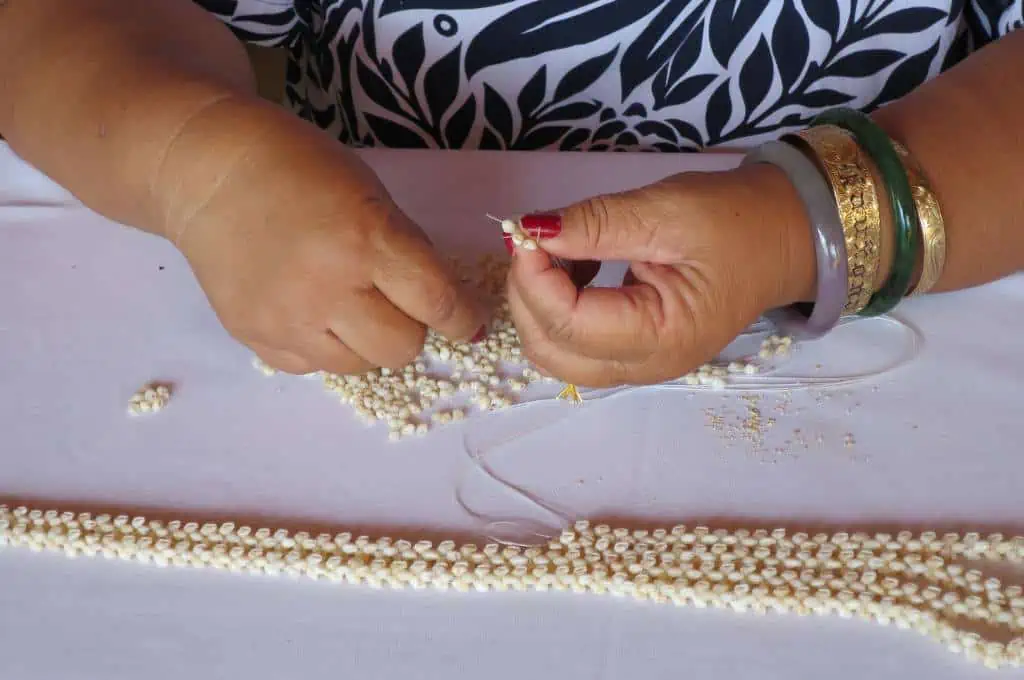
Many events offer free or low-cost workshops where local artisans teach visitors the basics firsthand.
This is one of the most respectful and rewarding ways a visitor can engage with Hawaiian culture, learning directly from the people who carry this tradition.
For more on experiencing Hawaii with cultural awareness, visit our Hawaiian Culture Guide.
Lei Day is also a wonderful reminder that the most meaningful parts of a Hawaii trip are often free.
A lei made by hand, a hula performed under an open sky, or simply saying “Hauʻoli Lā Lei” (“how-OH-lee lah lay”) to a local.
These are the moments that stay with you long after you leave.
Your Lei Day Hawaii Takeaway
Lei Day is one of the most welcoming celebrations in Hawaii for visitors.
It asks nothing of you except an open heart.
If you happen to be on any island on May 1, step into a park, find a free festival, and let the islands share something real with you.
Planning a May trip to Hawaii?
Our full guide to visiting Hawaii in May covers weather, crowds, events, and everything you need to make the most of the month.
And if you want to go deeper into what makes these islands so culturally rich, explore our facts about Hawaii for context that will enrich every step of your journey.
Hauʻoli Lā Lei (“how-OH-lee lah lay”), everyone.
FAQs for Lei Day in Hawaii
Is Lei Day free to attend?
Yes. The main Lei Day events across the islands are free and open to the public. The flagship 98th Annual Lei Day Celebration at Kapiʻolani Park on Oʻahu runs May 1 from 9 a.m. to 5 p.m. at no cost. Events on Maui, the Big Island, and Kauaʻi are also free to attend. A small number of ticketed add-on events exist, such as the Kaimana Beach Hotel’s Muʻu & Mimosas tea party on Oʻahu, but these are optional and separate from the main celebrations.
Can visitors and tourists participate in Lei Day?
Absolutely. Lei Day is genuinely inclusive and welcoming to everyone. Visitors are encouraged to attend the free festivals, watch hula performances, browse the lei contest exhibits, and try lei-making workshops offered at most events. You do not need to be local or have any prior knowledge of Hawaiian culture. Showing up with curiosity and respect is all that is required.
What should I wear to Lei Day?
Wear a lei, of course! Beyond that, comfortable, casual clothing suited to an outdoor park setting works perfectly. Many attendees wear aloha shirts, muʻumuʻu, or bright floral clothing in the spirit of the day. If you want to honor the island you are visiting, consider wearing the color associated with that island. For example, yellow on Oʻahu, red on the Big Island, pink on Maui, and purple on Kauaʻi.
Does the Lei Day celebration happen even if it rains?
Yes. The Kapiʻolani Park celebration on Oʻahu happens rain or shine, as confirmed by the City and County of Honolulu Department of Parks and Recreation. May is generally a lovely time of year in Hawaiʻi, but even if you get a passing shower, the celebration continues. Bring a light layer just in case.
When did Lei Day start in Hawaiʻi?
The first Lei Day celebration was held on May 1, 1928, in the lobby of the Bank of Hawaiʻi in Honolulu. The idea came from poet Don Blanding, who proposed it in a February 1928 column in the Honolulu Star-Bulletin. His colleague Grace Tower Warren suggested May 1 as the date and coined the phrase “May Day is Lei Day in Hawaiʻi.” Governor Wallace R. Farrington officially proclaimed May 1 as Lei Day in 1929, per the Honolulu Department of Parks and Recreation.
Is it rude to refuse a lei in Hawaiʻi?
Yes, declining a lei is generally considered disrespectful in Hawaiian culture. A lei is a personal expression of aloha, and refusing one is seen as rejecting that gesture of goodwill. If someone places a lei around your shoulders, accept it graciously, wear it, and say mahalo. Removing it in front of the person who gave it to you is also considered impolite.
Do I need to book or register for Lei Day events?
No registration or booking is needed for the main free Lei Day celebrations on any island. All the flagship events are walk-up and open to the public. If you want to attend a ticketed event like the Kaimana Beach Hotel’s Muʻu & Mimosas on Oʻahu, check the venue’s website in advance as those can sell out.
RECOMMENDED POSTS

Hawaii Flight Turbulence Injures Four Crew. Is Turbulence Getting Worse?
[dssb_sharing_buttons columns="5" icon_width="fixed" alignment="left" icon_color="#000000" use_custom_icon_size="on" icon_font_size="16px"...

Hawaii Holiday Bookings Are Falling Behind. Should You Book Now?
Some Hawaii hotels report holiday bookings falling behind last year’s pace. Could this mean better deals for travelers? Here’s what to know before booking.

Aloha Tower’s Observation Deck Reopens After 5 Years Closed. But the Work Isn’t Finished.
[dssb_sharing_buttons columns="5" icon_width="fixed" alignment="left" icon_color="#000000" use_custom_icon_size="on" icon_font_size="16px"...
Bryan Murphy is the creator of Hawaii's Best Travel and host of the Hawaii's Best podcast, a top-30 U.S. travel podcast with 700,000+ downloads and a 4.9-star rating from 280+ reviews on Apple Podcasts. A Certified Hawaii Destination Expert and member of the Hawaii Visitors & Convention Bureau, he helps visitors plan more meaningful trips to Hawaii with practical, respectful guidance. His work has been featured in Travel + Leisure, National Geographic, Yahoo!, Simple Flying, USA Today, Parents, and Fox.